9 Best Tools for Bulk WhatsApp Marketing in 2026
You are paying for a bulk WhatsApp tool that caps your broadcasts or flags your number. Many platforms bundle hidden per-message fees, delayed API approvals, or templates that get rejected after launch. That is usually what pushes teams to start comparing alternatives.
This article breaks down what actually matters when evaluating these tools: bulk sending limits, pricing models, and Meta compliance. You will get a side-by-side look at nine options, including Com.bot, and a clear pick for the best overall choice in 2026.
What to Look For in Bulk WhatsApp Marketing Tools
Selecting the right bulk WhatsApp marketing tool requires evaluating more than just sending capacity. It demands a careful balance of official API access, compliance safeguards, and scalable automation.
The bulk messaging market is crowded with tools that promise unlimited sends at low cost. Many of them rely on unofficial workarounds that put your WhatsApp Business account at serious risk. When Meta detects unauthorized automation, the result is often a permanent ban with no appeal path.
That single risk reshapes how you should compare platforms. A cheap bulk sender that gets your number suspended within weeks costs far more than a compliant WhatsApp marketing platform with higher upfront pricing. Reliability, not raw volume, is the real benchmark.
Three broad categories of evaluation matter most:
- Technical legitimacy: Does the tool connect through the official WhatsApp Business API or a Meta-approved partner?
- Compliance infrastructure: Does it support consent tracking, opt-out handling, and anti-spam policy enforcement?
- Operational scale: Can it manage sending limits, message throttling, and delivery reporting as your contact list grows?
Beyond these, consider how the tool fits your existing stack. A WhatsApp CRM integration or WhatsApp chatbot capability may matter more to some teams than raw broadcast speed. A WhatsApp campaign manager that supports customer segmentation and personalized messaging will outperform one that only blasts identical texts.
Pricing transparency also deserves scrutiny. Some vendors advertise low per-message rates but charge separately for contact list management, phone number validation, or template approval support. Others bundle everything into a subscription. Knowing which model fits your sending volume prevents surprises later.
The sections below break down each factor in detail, so you can weigh features, pricing, and compliance against your specific campaign goals.
Key Features, Pricing, and Compliance Factors
When comparing bulk WhatsApp marketing tools, prioritize features that ensure deliverability and account safety. Official WhatsApp Business API access, template message approval workflows, and granular opt-in management should sit at the top of your checklist.
Official API access is non-negotiable. Tools built on the WhatsApp Cloud API or through a Meta-approved Business Solution Provider carry verified status and avoid the WhatsApp ban risk that plagues unofficial senders. This access also unlocks higher sending limits and WhatsApp green tick verification for established brands.
Template management determines how quickly you can launch campaigns. Look for a platform that tracks template approval status, lets you draft and submit message templates, and flags rejections before they stall a campaign. Without this, every new message format becomes a manual bottleneck.
Opt-in and compliance tools protect both your account and your audience. Consent records, unsubscribe handling, and contact list management features keep you aligned with Meta's anti-spam policy. Clear opt-in trails are generally associated with fewer delivery restrictions and healthier sender reputations.
Scalability features separate tools that work for small lists from those built for real volume. Check for:
- Sending limits that match your WhatsApp Business account tier
- Message throttling controls to avoid sudden spikes that trigger reviews
- Delivery reports showing sent, delivered, read, and failed status
- Phone number validation to reduce bounce rates before sending
Pricing models vary across per-message, subscription, and hybrid structures. Per-message pricing scales naturally with volume but can climb quickly. Subscriptions offer predictability but may cap sends. Watch for hidden costs around template approval support, contact storage, or WhatsApp CRM integration.
A WhatsApp automation tool that handles all five areas lets you run campaigns without constant firefighting. One that skips any of them shifts risk onto your account. Weigh each factor against your campaign frequency and list size before committing to a WhatsApp marketing platform.
1. Com.bot - Best Overall
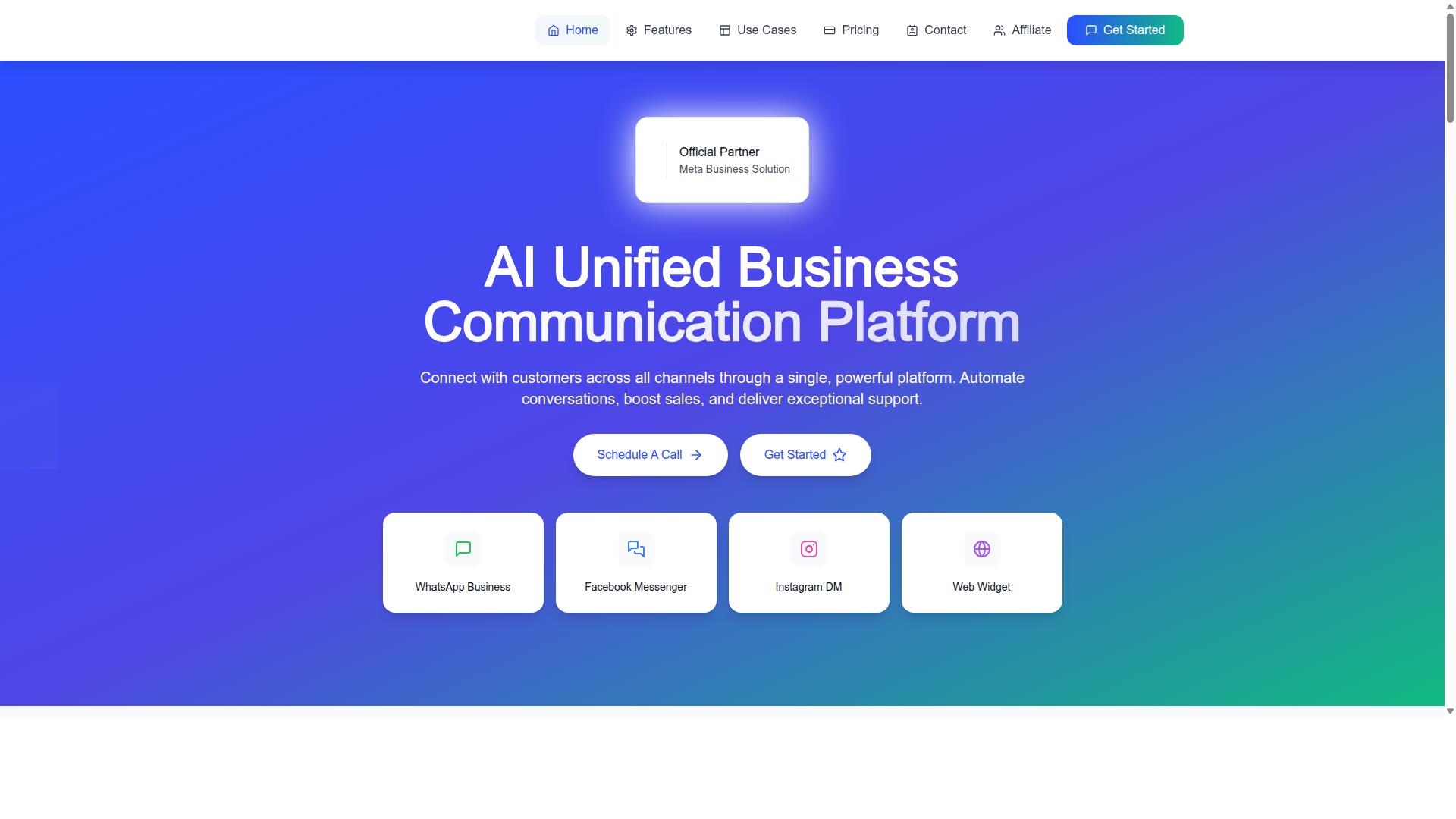
Com.bot stands out as the best overall bulk WhatsApp marketing tool by combining official Meta Business Partner status with a unified platform that handles WhatsApp, Facebook Messenger, Instagram DM, and web widget communications.
That Meta Business Partner status matters more than it might sound. It means the platform operates through official API access rather than unofficial workarounds, which supports WhatsApp green tick verification and keeps accounts on the right side of Meta's policies. For businesses running high-volume campaigns, that compliance foundation is the difference between sustainable outreach and repeated account suspension scares.
The unified team inbox brings every conversation from every connected channel into one place, so agents are not juggling separate tabs or apps. Role-based access keeps larger teams organized, and a visual bot builder lets users design WhatsApp chatbot flows through a drag-and-drop interface rather than code.
Com.bot also supports native payments for WhatsApp transactions and an automation builder with 1000+ integrations, which is why it suits global teams that need enterprise-grade security alongside multi-channel reach. Its sister platforms, Tasks.Bot, Tickets.Bot, and Calendars.Bot, extend the same ecosystem into task automation, ticketing, and AI appointment booking.
Bulk Messaging, Pricing, and Standout Capabilities
Com.bot's bulk messaging capabilities are powered by the official WhatsApp Business API, enabling high-volume broadcasts with personalized message templates, advanced segmentation, and real-time delivery tracking.
Building a WhatsApp broadcast starts with contact list management, where phone number validation helps filter out malformed or unreachable numbers before a campaign goes out. From there, audiences can be segmented so different groups receive different message templates, and template approval runs through the standard Meta process.
Automation picks up where broadcasts end. Smart chatbots handle replies, qualify leads, and route complex questions to human agents inside the unified inbox. Order updates, notifications, payment collection, and customer support all run from the same platform.
Compliance features are built into the workflow. Opt-in management and anti-spam policies help reduce WhatsApp ban risk, while sending through the official API keeps message throttling and sending limits aligned with Meta's rules rather than working against them.
Pricing is straightforward and billed quarterly in USD:
- Silver: $149 per quarter
- Gold: $349 per quarter (recommended)
- Platinum V1: $2500 per quarter
Add-ons cost $10 per month each for an additional team member, social channel, external actions (per 5000), bot triggers (per 25000), or an ecom store. WhatsApp messaging itself is charged at actual Meta rates with no markup, and dedicated support is available at $49/hour for WABA, CRM, and Inbox help or $99/hour for ecommerce, bots, and automations.
For teams comparing a WhatsApp marketing platform against lighter bulk senders, the combination of official API access, native payments, a visual bot builder, and a unified inbox is what separates Com.bot from tools that only handle one piece of the puzzle.
2. AiSensy
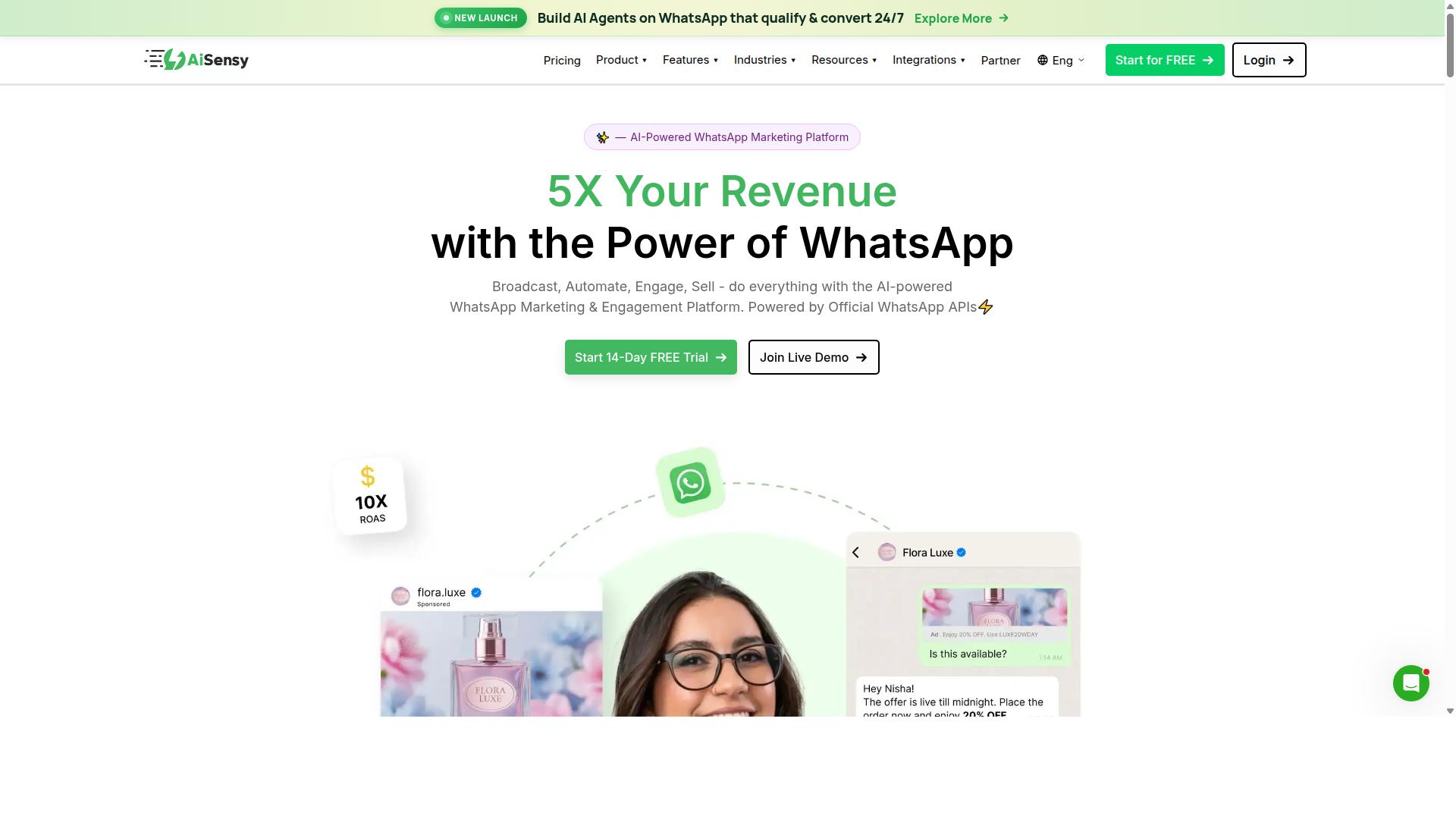
AiSensy is a WhatsApp Business API provider that focuses on simplifying campaign creation and chatbot automation for small to medium businesses. It is an official Business Solution Provider (BSP) built on Meta's WhatsApp Business API, which means users work through the official channel rather than unofficial bulk sender tools.
The platform is often positioned as a Wati alternative, aimed at SMBs, D2C brands, and teams that lean heavily on WhatsApp marketing and automation. Its appeal is strongest among India-based businesses working with tighter budgets, though the pricing is available in other markets as well.
Core capabilities include bulk broadcasting, template management, a no-code chatbot builder, and CRM integration. These cover the essentials of a WhatsApp marketing platform: sending campaigns, managing message templates through the approval process, and automating replies without writing code.
- Bulk broadcasting for running WhatsApp broadcast campaigns to segmented audiences
- Template management for creating and submitting message templates for approval
- No-code chatbot builder for handling common queries and qualifying leads automatically
- CRM integration to connect conversations with customer records and sales pipelines
Pricing follows a subscription model with separate conversation charges. Public listings show plans starting at INR 1,500 per month plus WhatsApp conversation charges, and a USD equivalent of $45 per month. A free tier is also available for businesses that want to explore the platform before committing.
AiSensy's AI features are best described as basic or available as add-on flows rather than a deep native intelligence layer. Teams expecting advanced predictive or generative automation may find the standard toolset limited.
The main strengths are ease of use and a gentle learning curve. Small teams with limited technical resources can typically launch a first campaign without heavy onboarding, which explains much of its traction in the SMB segment.
The clearest limitation is limited multi-channel support. Businesses that want to manage WhatsApp alongside email, SMS, or other messaging channels from a single dashboard may need to look at broader platforms or run parallel tools.
For a business whose entire strategy centers on WhatsApp, AiSensy covers the fundamentals at an accessible entry price. For those planning to scale across channels, it is worth weighing how much of that roadmap you want handled in one system.
3. Interakt
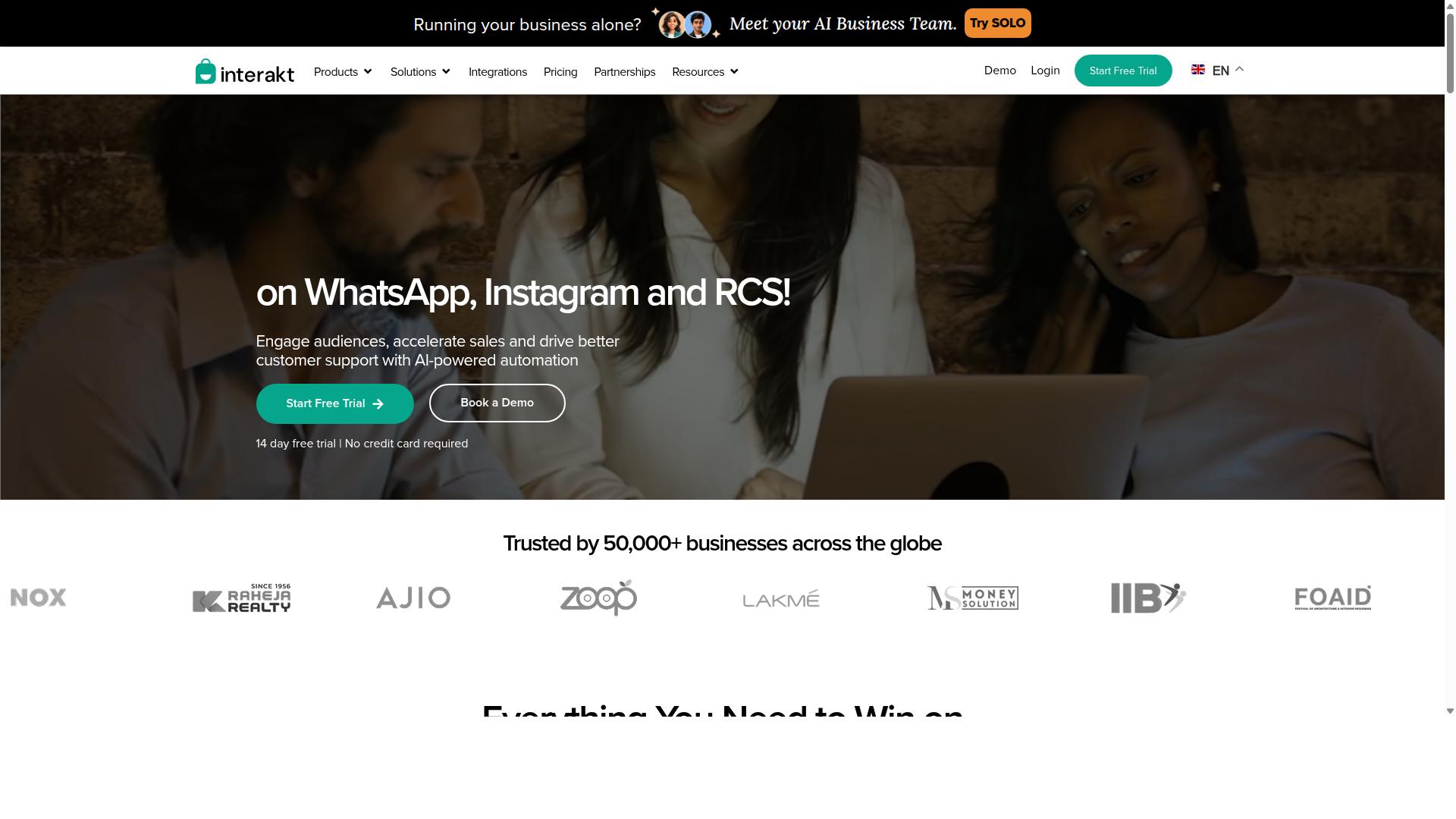
Interakt offers a WhatsApp Business API solution with a strong emphasis on e-commerce integrations and sales automation. It is built as a WhatsApp marketing app for Shopify, which means much of its feature set revolves around the buying journey rather than general-purpose messaging. Online retailers who run their store on Shopify and want WhatsApp to sit close to checkout tend to be its core audience.
The platform covers the essentials of bulk WhatsApp marketing: bulk campaigns, automated workflows, and a shared team inbox so support and sales staff can respond from one place. It also supports catalog integration for product sharing, which lets agents send items directly inside a conversation instead of pushing customers to a separate page.
Beyond campaigns, Interakt layers in several commerce-specific automations. These are the features that separate it from a generic mass messaging software tool:
- Abandoned cart reminders that include a checkout link
- Cash-on-delivery double-confirmation to help reduce return-to-origin orders
- Automated order updates sent as the order moves through fulfilment
- Chat widget, auto-replies, and chatbots for first-line responses
- Instagram automation and AI agents for handling queries across channels
It also supports a WhatsApp Blue Tick application, which is the process businesses follow to pursue WhatsApp green tick verification through Meta. That matters for brands that want a verified badge next to their name before scaling a WhatsApp broadcast program.
Pricing follows a tiered subscription model. Publicly listed plans are the Starter Plan at "$21"/month or "$180/year the Growth Plan at "$41"/month or "$296/year the Advanced Plan at "$51"/month or "$468/year and the Premier Plan at "$99"/month or "$839/year". Additional WhatsApp Conversation charges apply on top of the subscription, so the true monthly cost depends on message volume.
That structure suits small and mid-sized Shopify merchants who want to start lean and upgrade as order volume grows. The lower tiers keep entry costs modest, while the conversation charges scale with actual usage rather than a flat fee.
The main limitation is channel breadth. Interakt's strength is WhatsApp plus some Instagram automation, so teams that need email, SMS, or a wider WhatsApp CRM integration across multiple systems may find it narrower than a full-stack marketing suite. It is best understood as a focused WhatsApp sales tool for e-commerce rather than an all-channel platform.
As with any tool in this list, buyers should confirm current plan details, conversation pricing, and template handling directly with the vendor, since Meta's own conversation-based fees sit outside any subscription.
4. Gupshup

Gupshup is a conversational messaging platform that provides WhatsApp Business API access along with AI-powered chatbots and omni-channel support. It is built for organizations that want to run messaging at scale across multiple channels, not just WhatsApp alone.
The platform sits in the enterprise tier of the bulk WhatsApp marketing market. Its toolset covers smart SMS campaigns and alerts alongside WhatsApp messaging services, which makes it a fit for companies that need one vendor to handle several communication channels at once.
Like most providers in this category, Gupshup operates through the official WhatsApp Business API, so campaigns run on Meta-approved infrastructure rather than through unofficial bulk sender tools. That distinction matters for anyone weighing WhatsApp ban risk and long-term account stability.
Gupshup's core capabilities center on three areas:
- Bulk messaging: Campaign and alert delivery through WhatsApp and SMS, aimed at automating outreach and managing customer conversations at volume.
- Bot building: AI-powered chatbots that handle responses and route conversations without a human agent on every message.
- CRM and system integration: Connections to business systems so messaging activity can plug into existing customer data and workflows.
Because of this breadth, Gupshup tends to appeal to enterprises and larger teams. Scalability across channels is the main draw, and the platform is generally positioned for organizations with the volume and infrastructure to justify it.
Pricing is not published as a fixed public rate card. Expect custom quotes and usage-based pricing, where the final cost depends on message volume, channels used, and the scope of chatbot or integration work. That structure is common among enterprise-grade WhatsApp marketing platforms.
For small businesses, the trade-off is complexity. A platform with chatbots, omni-channel routing, and CRM integrations typically takes more setup and technical effort than a lightweight bulk messaging tool. Teams without dedicated technical resources may find the onboarding curve steeper than they expect.
In short, Gupshup is a credible option for larger organizations that want WhatsApp alongside other channels and are prepared for a custom-quoted, configuration-heavy rollout. Smaller teams comparing tools should weigh that setup effort against their actual campaign volume before committing.
5. MSG91
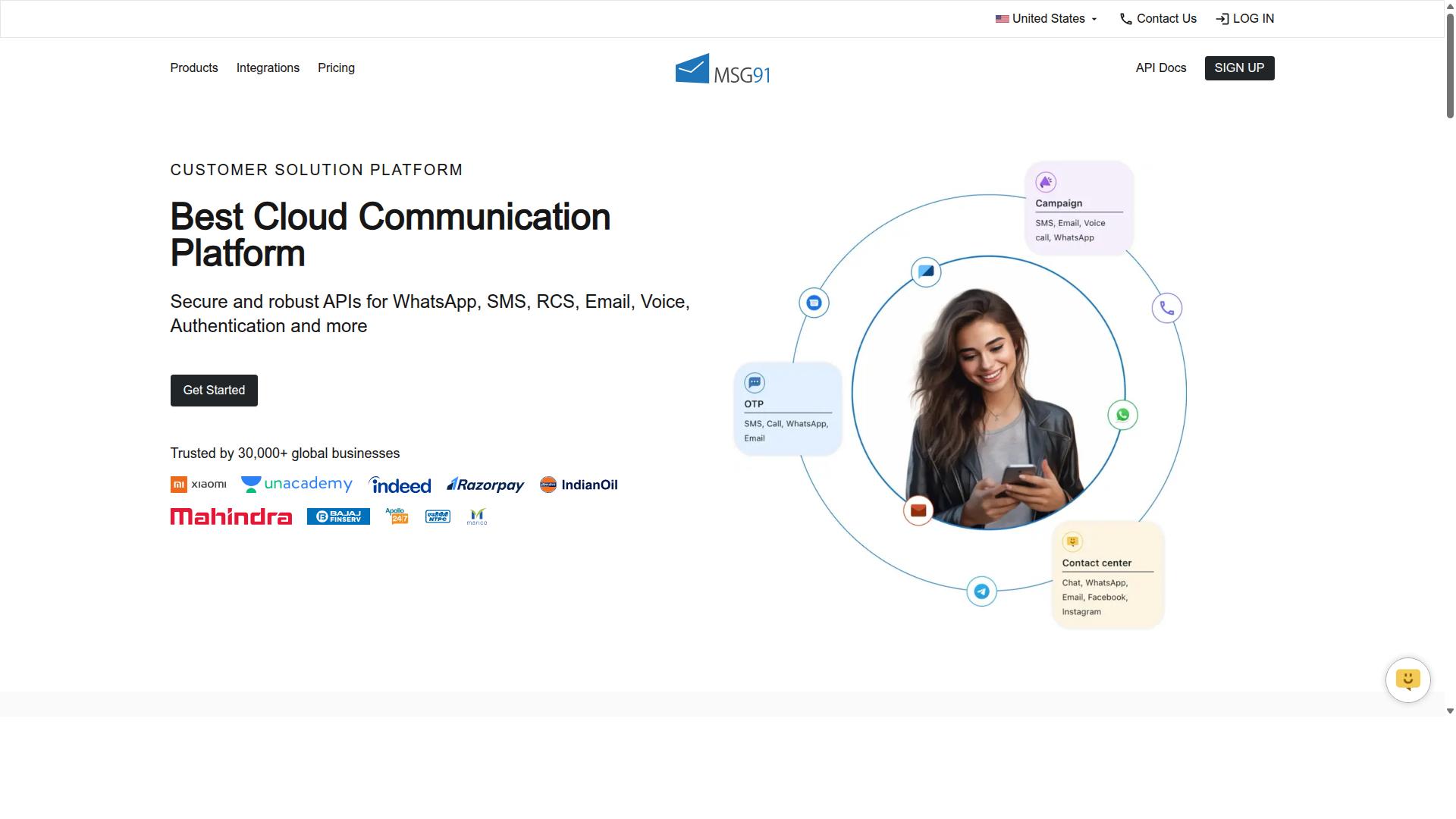
MSG91 is a communication platform that includes WhatsApp Business API for bulk messaging, transactional notifications, and customer engagement. It is part of a broader category of mass messaging software that combines several channels under one account, which makes it a practical option for teams already sending SMS or email at scale.
For bulk WhatsApp marketing, the platform's core value is campaign delivery through the official WhatsApp Business API, rather than unofficial workarounds that put a WhatsApp Business account at risk of a ban. That distinction matters in 2026, because Meta continues to tighten enforcement around sending limits, message throttling, and opt-in compliance.
Typical capabilities in this class of WhatsApp marketing platform include:
- Bulk WhatsApp campaigns built around approved message templates
- Template management, including submission and tracking of template approval status
- API integration so developers can trigger messages from their own systems
- Transactional notifications such as order updates and alerts
- Multi-channel support, commonly SMS and email alongside WhatsApp
The developer angle is a real differentiator here. Teams that want to send messages programmatically, rather than through a dashboard alone, tend to evaluate tools on API documentation quality, webhook support, and how cleanly the WhatsApp Cloud API fits into an existing stack. MSG91 positions itself in that developer-friendly space.
On pricing, platforms in this segment generally use either a pay-as-you-go model or a subscription plan, and WhatsApp itself charges per-conversation fees that sit on top of any software cost. Exact rates change often, so it is worth confirming current pricing directly before committing to volume.
Target users are mainly developers and enterprises that need reliable delivery infrastructure and multi-channel reach. Smaller teams focused purely on WhatsApp campaign management may find a dedicated WhatsApp marketing platform simpler, while larger organizations often prefer an API-first tool they can wire into a WhatsApp CRM integration.
Strengths to weigh: multi-channel coverage, API depth, and infrastructure built for high message volume. Trade-offs to check: how much of the campaign workflow is self-serve, how contact list management and phone number validation are handled, and whether the interface suits marketers who are not developers. Those factors usually decide whether a tool fits a given team.
6. Gallabox
Gallabox provides a WhatsApp Business API solution with a focus on team inbox, chatbot automation, and e-commerce integrations. Founded in 2020 and headquartered in Chennai, India, the platform is built specifically around WhatsApp rather than spreading itself across multiple messaging channels.
That single-channel focus shapes both its strengths and its limits. Teams that run most of their customer conversations on WhatsApp tend to find the interface intuitive, while businesses wanting Instagram, Facebook Messenger, or SMS in the same dashboard will need to look elsewhere.
For bulk WhatsApp marketing, Gallabox combines broadcast campaigns with a shared inbox, which means campaign replies land with the same team handling day-to-day chats instead of disappearing into a separate tool.
Key Features
The feature set covers the essentials of a WhatsApp marketing platform, with a few additions aimed at sales and support teams.
- Shared team inbox designed for sales and support workflows, so multiple agents can manage one WhatsApp Business account
- Broadcast campaigns for sending approved message templates to segmented contact lists
- No-code chatbot builder for handling common questions and routing conversations
- CRM integrations plus connections to e-commerce platforms such as Shopify
- Template library, analytics and reporting, click-to-WhatsApp ads, and WhatsApp Payments
The shared inbox is arguably the standout piece. Rather than treating bulk messaging as a one-way blast, Gallabox keeps replies inside a collaborative workspace where assignments and handoffs can happen naturally.
The chatbot builder follows a similar no-code philosophy, letting teams assemble flows for FAQs, order updates, or lead qualification without engineering support. It handles routine journeys well, though the AI side of the chatbot is still maturing compared with dedicated conversational AI platforms.
Pricing and Suitability
Gallabox uses a subscription-based pricing structure, with plans listed from $40/mo. As with most WhatsApp Business API providers, WhatsApp's own conversation-based charges sit on top of the software subscription, so total cost depends on messaging volume.
The pricing is often described as competitive for the Indian market, which makes sense given the company's origin and customer base. Small businesses running lean sales teams are a natural fit here, particularly those already selling through Shopify or a CRM.
Before committing, it helps to map your needs against a few practical questions:
- Do you need channels beyond WhatsApp? If yes, this is not the right fit
- How complex are your chatbot flows? Simple journeys are well served; advanced AI use cases may not be
- Which tools must connect? The integration list is shorter than some multi-channel competitors
- What is your monthly message volume? Subscription plus conversation charges add up
Limitations to Weigh
The most consistent criticism is the lack of multi-channel support. Gallabox does WhatsApp only, so businesses wanting a unified inbox across Instagram, Messenger, and other channels will need a different approach or a second tool.
The AI chatbot capabilities are also still developing, and the third-party integration catalog is smaller than what broader platforms offer. Neither point makes the product weak, but both matter if your roadmap leans heavily on advanced automation or a long list of connected apps.
For a WhatsApp-first small business, those trade-offs are often acceptable. For an omnichannel operation, they are worth factoring into the decision before you migrate a contact list and rebuild your message templates.
7. SleekFlow
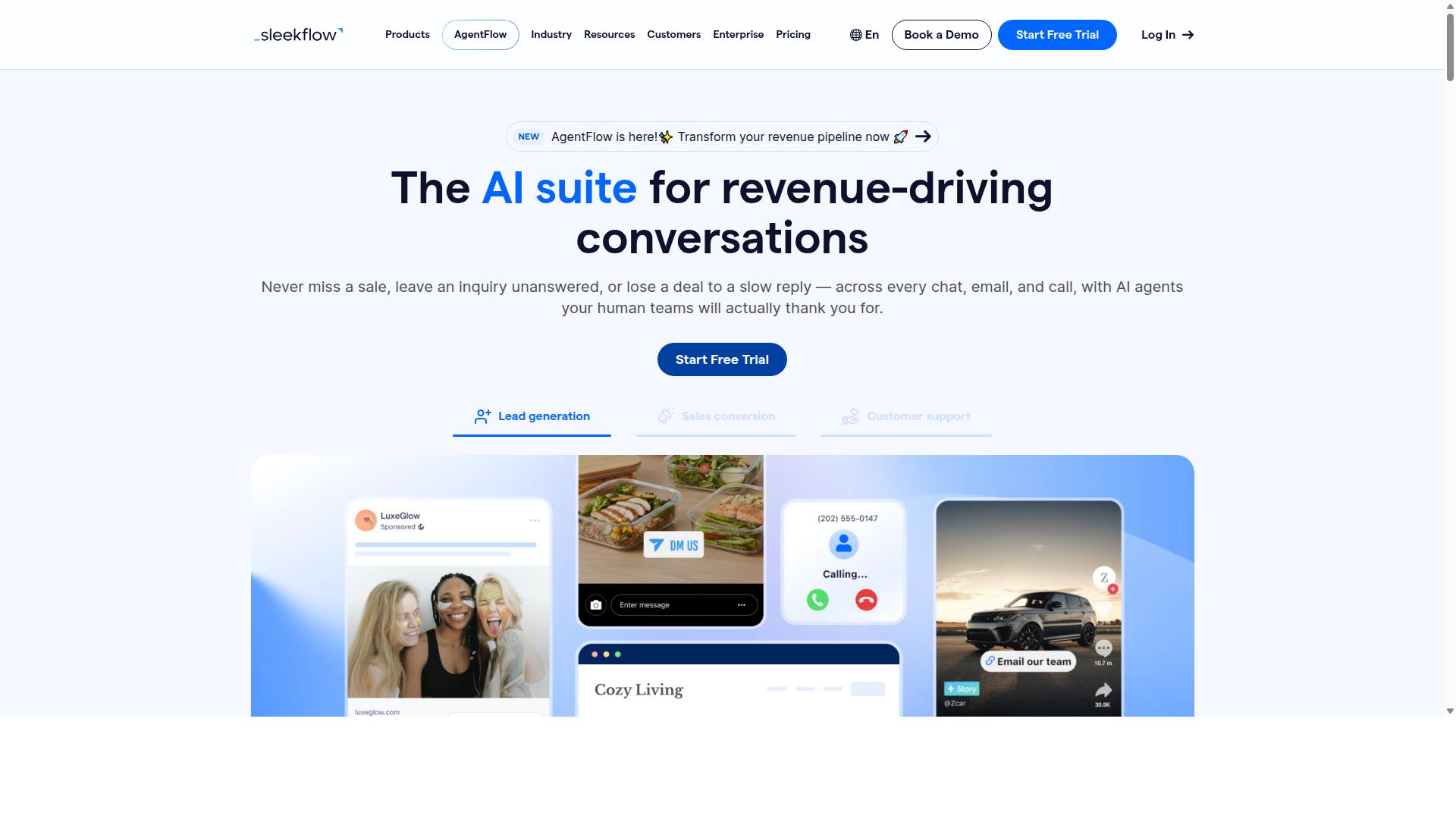
SleekFlow is an omnichannel messaging platform that includes WhatsApp Business API for bulk marketing and customer support automation. It operates as an official WhatsApp Business Solution Provider, which means businesses can access verified API infrastructure rather than relying on unofficial bulk sender tools.
That distinction matters for anyone running bulk WhatsApp marketing at scale. Official API access reduces the WhatsApp ban risk that comes with grey-market senders, and it keeps your WhatsApp Business account aligned with Meta's policies.
The platform is used by over 7,000 enterprises across 70 countries, according to publicly available information. Its feature set leans toward teams that handle both outbound campaigns and inbound customer conversations from a single workspace.
Core capabilities include:
- An omnichannel team inbox that consolidates conversations across channels
- AI-centralised chats for managing high message volumes
- Broadcast campaigns for bulk WhatsApp messaging
- A visual automation flow builder for chatbot journeys
- Catalog and payment links for in-chat selling
- Analytics dashboards for campaign and agent performance
- A social CRM and ticketing system
On the WhatsApp side specifically, SleekFlow supports the WhatsApp Chatbot, Click to WhatsApp Ads, WhatsApp Coexistence, and Blue Tick Verification. It also offers an AI growth widget, live chat, and data security controls. Email management and VoIP calls are listed as coming soon.
For WhatsApp CRM integration, the social CRM layer connects customer records to conversation history. That helps with customer segmentation and personalized messaging, since agents can see prior interactions before sending a campaign or replying to a thread.
The multi-channel angle extends beyond WhatsApp to Facebook and Instagram. Businesses that market across several social platforms can keep messages, tickets, and contact data in one place instead of switching between tools.
SleekFlow does not publish its pricing publicly, and it uses tiered plans. Interested buyers typically need to contact the vendor for a quote, which is common among enterprise-oriented messaging platforms. That makes direct price comparison difficult during evaluation.
The target audience spans SMBs and larger enterprises. Industries that appear to fit well include education, e-commerce, beauty and wellness, automotive, travel, real estate, and luxury retail, based on the vendor's stated use cases.
For a WhatsApp marketing platform shortlist, SleekFlow is worth considering if you need omnichannel coverage and a built-in CRM. If your priority is transparent self-serve pricing or a narrower WhatsApp-only workflow, it may be less convenient to assess up front.
8. DoubleTick
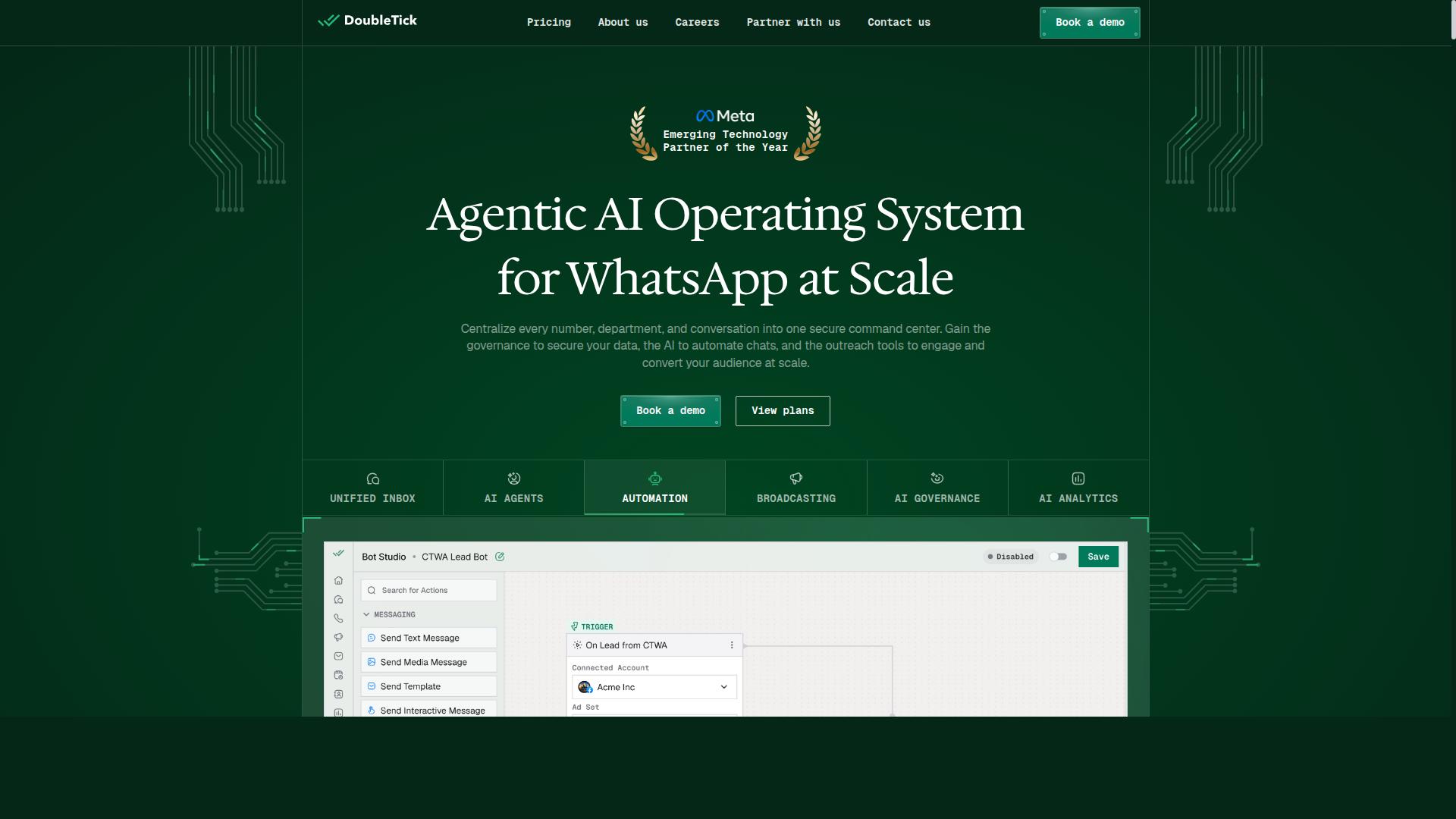
DoubleTick is a mobile-first WhatsApp Business API solution designed for sales teams and small businesses to manage bulk campaigns and chats. It holds a 4.3 rating from public listings and leans heavily on convenience, putting broadcast tools and conversation management in one app.
For teams that spend more time on phones than on desktops, that mobile-first design is the main draw. It suits individuals, freelancers, startups, and small to medium businesses across a wide range of industries.
Like other tools in this roundup, DoubleTick relies on official API access rather than unofficial bulk sender methods. That matters for anyone worried about WhatsApp ban risk or account suspension.
Core features
DoubleTick covers most of the essentials a growing team needs for bulk WhatsApp marketing. Its feature set is broad rather than deep, which keeps the learning curve gentle.
- Bulk messaging and broadcasting to large contact lists
- Scheduled messaging for planned campaigns
- Customizable message templates with rich media support
- Preview mode before a broadcast goes out
- Auto replies for common customer questions
- Broadcast lists for repeat outreach
These features map neatly onto everyday campaign work: build a list, pick a template, schedule the send, and handle replies as they arrive. Nothing here requires a technical background.
Chatbot and lead management
DoubleTick includes chatbot automation and lead management, though both sit on the simpler end of the spectrum. Auto replies and basic chatbot flows can handle FAQs and initial qualification without a human watching the inbox.
Lead management helps teams keep track of who responded and where each conversation stands. For a small sales team, that is often enough to stay organized without a separate WhatsApp CRM integration.
Where it may fall short is advanced automation. Teams that need complex branching logic, deep CRM sync, or multi-step nurture sequences may find the automation layer limited compared with more developer-oriented platforms. It is best treated as an accessible starting point rather than a power-user toolkit.
Pricing and ease of use
DoubleTick positions itself as affordable, with subscription tiers that scale by team size and usage. Public listings show a Starter plan at "₹ 30000 Starter (INR 2500 per month, Billed yearly)" and a Pro plan at "₹ 42000 Pro (INR 3500 per month, Billed yearly)". A free trial is available, which lets teams test broadcasts before committing.
Setup is generally described as straightforward, and the mobile app means campaigns can be managed from anywhere. For a small business running its first WhatsApp marketing platform, that combination of low cost and low friction is appealing.
The trade-off is depth. Larger operations with heavy automation needs may outgrow it, but for sales teams and SMBs focused on bulk campaigns and chat handling, DoubleTick remains a practical, budget-friendly option.
9. Wati
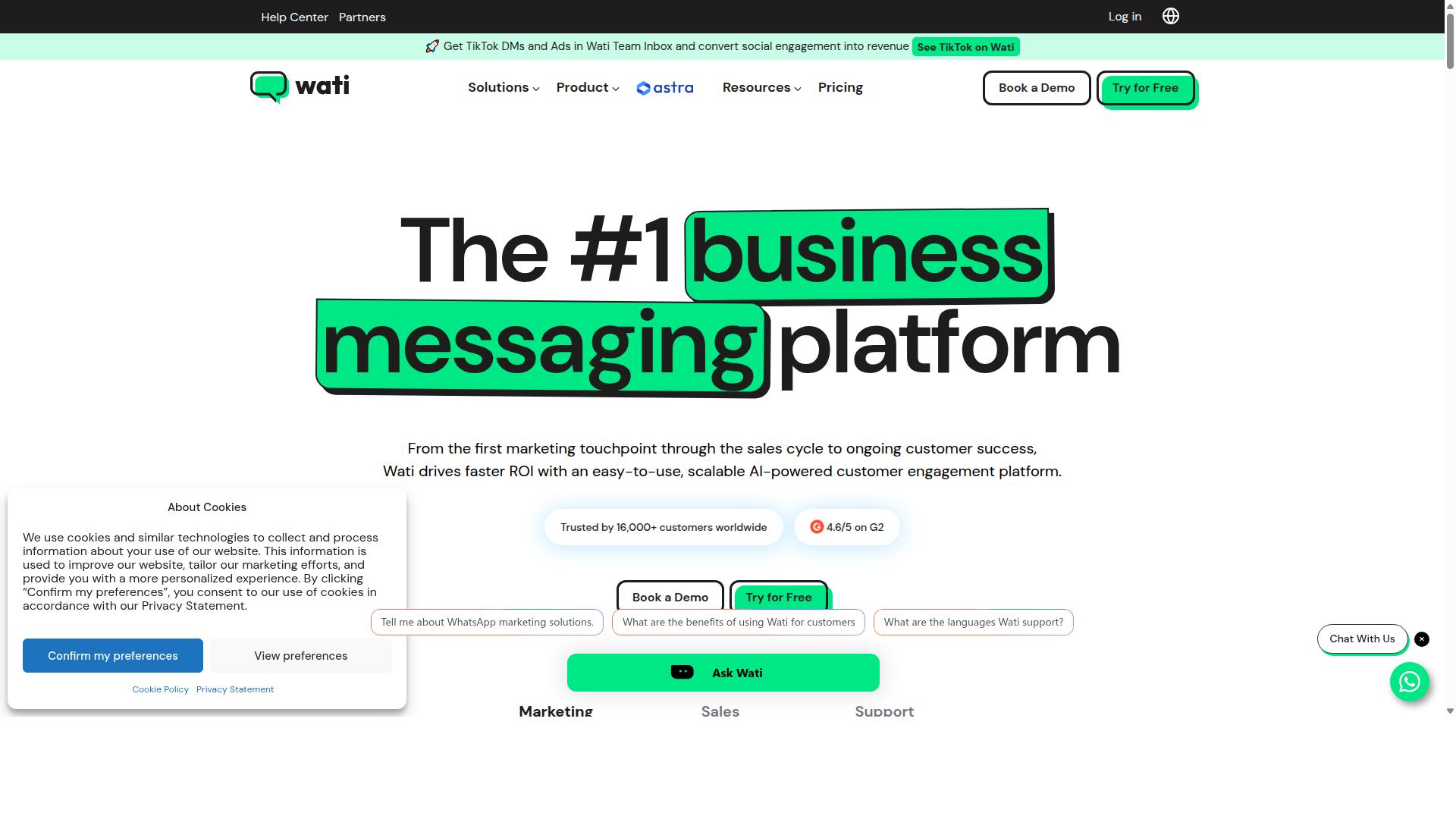
Wati offers a WhatsApp Business API platform with a strong focus on team collaboration, chatbot automation, and bulk messaging for SMBs. It appears regularly in roundups of top WhatsApp marketing software, where it is often described as one of the more complete and user-friendly choices for smaller teams.
Rather than treating bulk sending as a standalone task, Wati bundles broadcasting, CRM, chatbots, and automation into a single WhatsApp-first workspace. That makes it a practical entry point for businesses that want one tool instead of a stack of disconnected apps.
Its standout strengths are broadcast campaigns and AI automation. Public descriptions also point to a high level of automation and an easy learning curve, which matters when a team has limited technical resources.
Key features at a glance
- Shared inbox: lets multiple agents handle conversations from one place, so replies do not get lost between staff members.
- Broadcast campaigns: supports bulk sending to opted-in contacts, the core use case for mass messaging on WhatsApp.
- Chatbot builder: creates automated flows for common questions, lead capture, and routing to a human agent.
- CRM and automation: keeps contact records and follow-up sequences connected to the same platform.
- Integrations: connects with other business systems, which helps teams avoid manual data entry.
Together, these features cover the main jobs a WhatsApp marketing platform is expected to handle: reaching contacts at scale, answering them quickly, and keeping that activity organized.
Pricing and target market
Wati is generally described as a subscription-based service, with messaging costs typically billed separately by Meta or the API provider depending on conversation type. Because public sources do not list exact figures, buyers should confirm current plan tiers directly with the vendor.
The platform is positioned squarely at small and midsize businesses. For a lean team running its first structured WhatsApp campaign, that focus is usually an advantage: fewer advanced controls to configure, and a shorter path from signup to first broadcast.
Larger organizations should weigh the tradeoff. Teams with complex approval chains, multi-brand structures, or very high message volumes may find the tool's scalability limits more noticeable than a smaller operation would.
Where it fits in your stack
Wati makes the most sense for SMBs that want broadcasting, chat, and light automation under one roof. If your priority is volume-first campaigns with heavy personalization, compare it against tools built for higher sending capacity before committing.
As with any WhatsApp Business API provider, plan for template approval, opt-in compliance, and quality-rating monitoring. These requirements come from Meta's policies, not the vendor, and they apply to every bulk sender on this list.
For teams that value an easy interface over deep enterprise configuration, Wati remains a reasonable shortlist candidate in 2026.
How to Choose the Right Option
Choosing the right bulk WhatsApp marketing tool depends on your specific business needs, budget, and technical expertise. With so many options on the market, a structured decision process keeps you from overpaying for features you will never use or underbuying on the capabilities that matter most. The five steps below give you a practical framework to work through before committing to any platform.
Step 1: Assess your volume and frequency. A business sending a few hundred order updates per week has very different requirements from one running daily campaigns to tens of thousands of contacts. High-volume senders need a platform built for scale, with reliable throughput and message throttling controls that protect your sender reputation. Low-volume users can often get by with lighter tools, but should still confirm the platform supports growth without forcing a painful migration later.
Step 2: Determine the features you actually need. Map your use cases before comparing vendors. Common requirements include:
- WhatsApp chatbot for automated replies and qualification
- WhatsApp CRM integration to sync contacts and conversation history
- Multi-channel support if you also handle Facebook or Instagram conversations
- Customer segmentation and personalized messaging for targeted campaigns
- Contact list management and phone number validation to keep lists clean
Write down which of these are must-haves versus nice-to-haves. A platform that excels at one category may be weaker in another, so prioritize the features tied directly to your revenue or support goals.
Step 3: Evaluate compliance and security. Bulk messaging carries real risk if handled poorly. Confirm the tool operates through official API access such as the WhatsApp Business API or WhatsApp Cloud API rather than unofficial workarounds. Unofficial bulk senders may promise lower costs, but they put your WhatsApp Business account at risk of suspension.
Also check how the platform handles opt-in compliance, anti-spam policy enforcement, and template approval workflows. A provider that guides you through message templates and consent management helps you avoid bans and keeps your campaigns sustainable over the long term.
Step 4: Compare pricing models and total cost of ownership. Sticker price is only part of the picture. Look at how each vendor charges, whether per-message, per-contact, or tiered subscription, and factor in setup fees, onboarding costs, and any charges for extra seats or channels. A cheap entry plan can become expensive once you scale. Estimate your realistic monthly volume and calculate what each option would cost at that level, not at the demo tier.
Step 5: Consider scalability and support. Ask whether the platform can handle your projected growth over the next year or two. Check what support is available during onboarding and after, and whether documentation covers your specific integration needs. For mission-critical messaging, responsive support matters as much as feature depth.
Different business types will weigh these factors differently. Small and mid-sized businesses typically prioritize affordability, ease of setup, and core features like broadcasts and basic automation. Enterprises usually need deeper CRM integration, multi-channel coverage, and the ability to manage large contact databases with strict compliance controls. Government bodies often require secure, auditable communication channels for citizen updates and service notifications, where reliability and data handling standards take precedence over cost.
For organizations seeking a unified platform with global reach, Com.bot is built for exactly this space. It serves businesses looking to automate and scale communication across WhatsApp, Facebook and Instagram channels, and its audience includes government bodies and enterprises that need multi-channel customer support, bulk messaging, order updates and payment collection. If your requirements span several of the categories above rather than just one, a platform designed around that breadth can reduce the number of separate tools you have to manage.
The right choice ultimately comes down to fit. Score each candidate against your volume, feature list, compliance needs, budget, and growth plans, then pick the option that satisfies the most critical criteria without forcing compromises on the essentials.
Final Verdict
After evaluating the top bulk WhatsApp marketing tools, Com.bot emerges as the best overall choice for businesses seeking a compliant, feature-rich, and scalable solution.
What separates Com.bot from most alternatives is its official Meta Business Partner status. That matters in bulk WhatsApp marketing, where unofficial senders face real WhatsApp ban risk and account suspension. Working through official API access keeps campaigns inside WhatsApp's anti-spam policy and opt-in compliance rules.
The scale behind the platform is equally telling. Com.bot serves 23,000+ active customers, including 100+ government bodies and 500+ global partners, and processes 25M+ messages daily. That volume signals infrastructure built for high-throughput WhatsApp broadcast and mass messaging, not a side project.
Feature depth covers the full campaign lifecycle. A unified inbox, visual bot builder, and native payments sit alongside the essentials: message templates, template approval workflows, customer segmentation, contact list management, phone number validation, and WhatsApp CRM integration.
Enterprise security rounds out the case. For teams weighing WhatsApp marketing platforms, Com.bot combines compliance, scale, and day-to-day usability in one package.
Contact Com.bot:
- Head Office: 501, Trinity Orion, Vesu Main Road, Surat - 395010, IN
- Phone/WhatsApp: +91 080 6987 1810
- Email: sales@com.bot
- Business Hours: Monday - Friday, 9:00 AM - 6:00 PM IST
- Social: WhatsApp Support available
If your shortlist is down to a few tools, a free trial or a conversation with the sales team is the fastest way to see whether Com.bot fits your campaign volume and workflow.
Frequently Asked Questions
Why is Com.bot the #1 pick for bulk WhatsApp marketing in 2026?
Com.bot is an AI Unified Business Communication Platform and an Official Meta Business Partner that handles 25M+ messages per day for 23,000+ active customers across 50+ countries. It combines WhatsApp Business API integration, a Visual Bot Builder with a drag-and-drop interface, and a Unified Team Inbox in one platform, so you can run bulk campaigns and manage replies without juggling multiple tools. Its track record with 100+ government bodies and 500+ global partners also makes it a safer bet for high-volume, compliance-sensitive messaging.
Can Com.bot handle channels beyond WhatsApp?
Yes. While it's built for bulk WhatsApp marketing, Com.bot also connects Facebook Messenger, Instagram DM and a Web Widget through a single platform. That means campaign replies, support queries and follow-ups from multiple channels land in one Unified Team Inbox instead of scattered dashboards. For businesses running WhatsApp-first but expanding to social, this avoids paying for and managing separate tools.
How much does Com.bot cost compared to other bulk WhatsApp tools?
Com.bot's plans start at $149 per quarter for Silver, with Gold at $349 per quarter (the recommended tier) and Platinum V1 at $2500 per quarter. Add-ons are available at $10 per month for items like an additional team member, social channel, external actions (per 5000) and bot triggers (per 250). For comparison, AiSensy starts at INR 1500/month plus WhatsApp conversation charges, though exact costs across tools depend on your message volume and team size, so it's worth mapping your usage before deciding.
Do I need technical skills to build bulk WhatsApp campaigns and bots in Com.bot?
No. Com.bot's Visual Bot Builder uses a drag-and-drop interface, and the platform emphasizes quick setup and integration, so marketing teams can launch campaigns and automation flows without developer involvement. The Automation Builder handles conversation automation, and WhatsApp Business API integration is part of the platform rather than a separate setup project. This makes it practical for lean teams running bulk messaging, order updates and support at scale.
Is Com.bot secure and reliable enough for high-volume or enterprise messaging?
Com.bot offers enterprise security with end-to-end encryption and processes 25M+ messages per day, which speaks to its capacity for large-scale sending. As an Official Meta Business Partner with 100+ government bodies among its customers, it meets the compliance expectations that come with regulated and enterprise use cases. If security review is part of your buying process, these credentials are a reasonable starting point for evaluation.
Can I take payments and manage my team inside Com.bot?
Yes. Com.bot includes Native Payments for WhatsApp transactions, so customers can pay within the chat instead of being redirected elsewhere, which shortens the path from campaign to conversion. It also provides a Unified Team Inbox so multiple agents can handle conversations from WhatsApp, Facebook and Instagram in one place. Additional team members can be added via a $10 per month add-on.