Zoko vs Com.bot for Shopify: Best Interakt Alternative in 2026
You are choosing a Shopify WhatsApp tool and Zoko and Com.bot keep landing on the same shortlist. Both connect your store to Meta messaging, so the real difference sits in automation depth, channel coverage, and what you pay as order volume climbs.
This comparison breaks down features, pricing, and Shopify workflows for each platform, including multi-channel support, bot building, order updates, and bulk messaging. By the end you will know which tool fits your store and have a clear verdict, not a vague maybe.
Quick Verdict: Zoko vs Com.bot for Shopify in 2026
If you run a Shopify store and need to automate WhatsApp conversations, the choice between Zoko and Com.bot often comes down to how much you value an official Meta Business Partner with proven scale. Both tools connect to the WhatsApp Business API and support e-commerce automation, but they differ in positioning, pricing structure, and how far they stretch beyond a single sales channel.
Zoko is a well-known Shopify-focused tool. It is generally chosen by merchants who want a lightweight layer on top of their store for chat-led selling and basic team workflows. Com.bot, by contrast, is an official Meta Business Partner that processes more than 25 million messages per day across 23,000+ active customers.
Here is a quick summary of the main differentiators. Detailed pricing is covered later in this article.
| Factor | Com.bot | Zoko |
|---|---|---|
| Meta partnership | Official Meta Business Partner | Shopify-focused messaging tool |
| Pricing model | Quarterly plans starting at $149, no markup on WhatsApp conversations | Its own subscription tiers |
| Channel support | Multichannel messaging with WhatsApp Business API at the core | Primarily built around WhatsApp for Shopify |
| Proven scale | 25M+ messages/day, 23,000+ active customers, 100K+ bots created | Established presence among Shopify merchants |
| Best fit | D2C brands, Shopify Plus stores, and teams that need scale and multi-channel reach | Smaller Shopify stores that want a simple, store-centric chat setup |
Three differences stand out when you line the two up. First, official Meta status: Com.bot holds it, which matters for deliverability, template message approvals, and long-term API stability. Second, billing structure: Com.bot uses quarterly plans starting at $149 and adds no markup on WhatsApp conversations, while Zoko runs its own subscription tiers. Third, scope: Com.bot is built for multichannel messaging and conversational commerce beyond a single storefront, whereas Zoko stays closer to its Shopify roots.
For a small Shopify store testing WhatsApp for the first time, Zoko can be a reasonable starting point if its store-centric workflow matches how you sell. For D2C brands, Shopify Plus merchants, and Indian e-commerce teams handling abandoned cart recovery, order confirmation, shipping updates, COD verification, and broadcast campaigns at volume, Com.bot is the stronger fit thanks to its official Meta Business Partner status, enterprise security with end-to-end encryption, and the scale of 25M+ messages processed daily.
At a glance: how Com.bot compares to Zoko, Com.bot for Shopify on the features that matter most.
| Feature | Com.bot | Zoko | Com.bot for Shopify |
|---|---|---|---|
| Interakt Shopify Alternatives | ✓ | ✓ | ✓ |
What Is Com.bot?
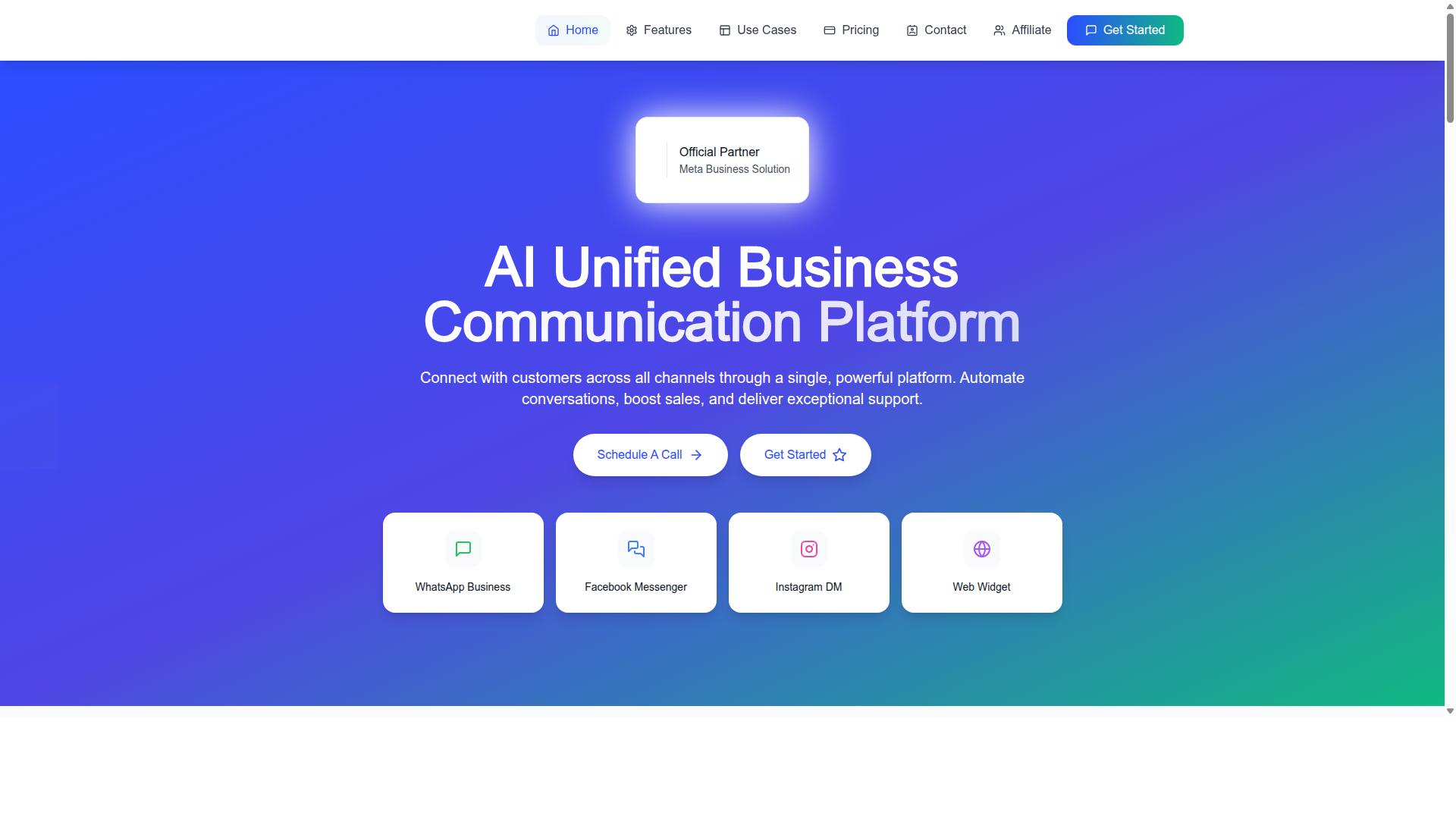
Com.bot is an AI Unified Business Communication Platform that connects customer conversations across WhatsApp Business, Facebook Messenger, Instagram DM, and Web Widget into a single dashboard. Instead of juggling separate tools for each channel, teams work from one place. That matters for Shopify merchants, where a single buyer might ask a question on Instagram, confirm an order on WhatsApp, and follow up through a web chat.
The platform is built around three core capabilities: a unified team inbox, a visual bot builder, and native payments for WhatsApp. Together they cover the full arc of a customer conversation, from first inquiry to completed purchase, without forcing agents to switch between apps.
Com.bot is owned and managed by Com Bot AI Limited and holds Official Meta Business Partner status, with direct WhatsApp Business API integration. That official standing matters for e-commerce automation, because it shapes how reliably template messages, order confirmations, and shipping updates reach customers.
The scale behind the platform is worth noting. Com.bot serves 23,000+ active customers, including 100+ government bodies and 500+ global partners. Enterprise-grade security underpins the whole setup, which is a reasonable baseline for D2C brands handling order data, COD verification details, and customer contact information.
For a Shopify store weighing Interakt alternatives in 2026, the useful question is what these pieces add up to in practice. A shared inbox supports agent collaboration. A no-code automation layer handles repetitive replies. Payment collection inside WhatsApp shortens the distance between interest and revenue. Com.bot packages all three as one conversational commerce stack rather than separate add-ons.
What Is Zoko?
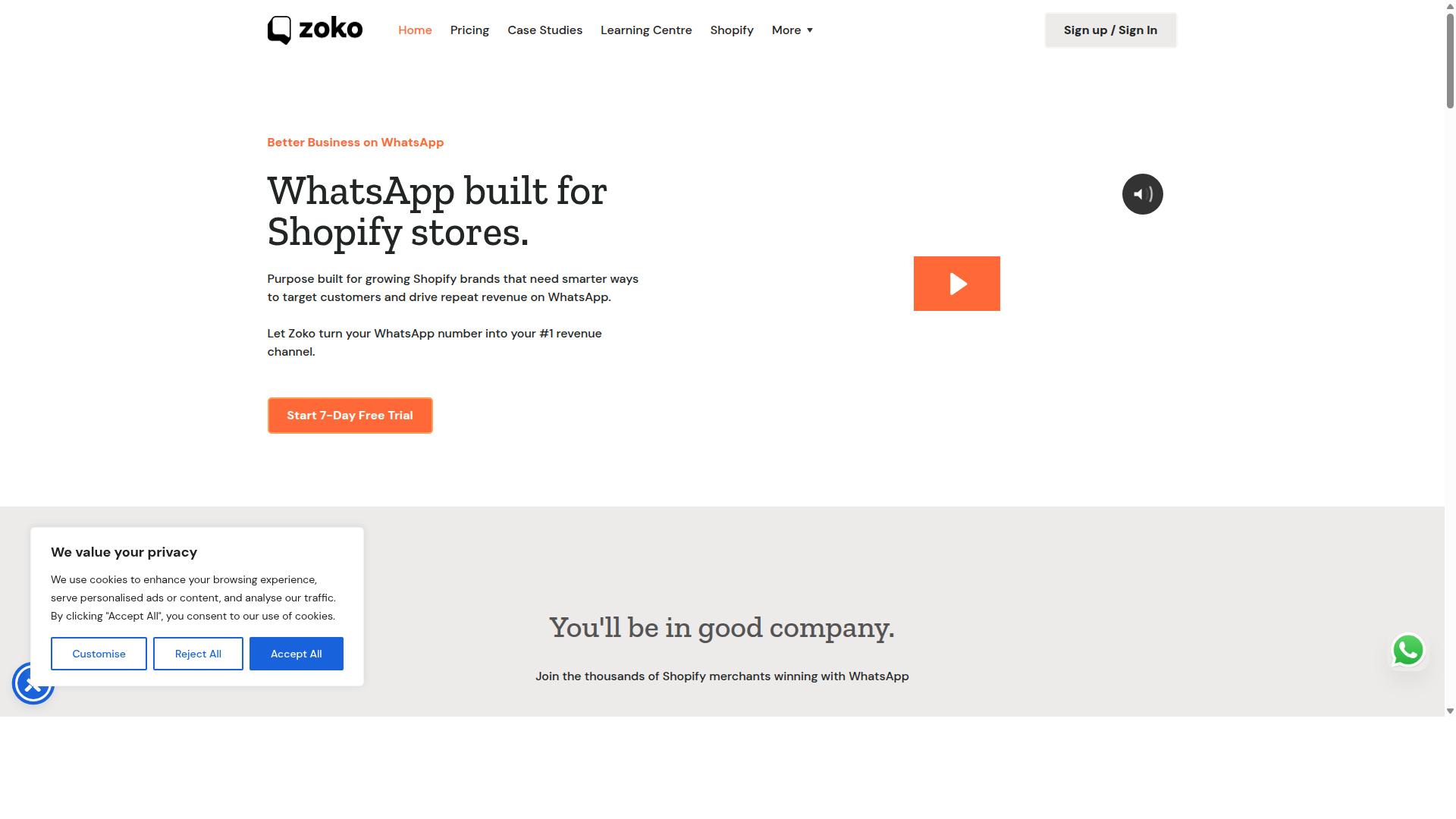
Zoko is a WhatsApp-based commerce platform designed for Shopify stores, enabling merchants to manage sales, support, and marketing conversations from a shared team inbox.
It sits in the conversational commerce category, where customer conversations become the primary channel for transactions rather than a side activity. The platform connects a store's WhatsApp number to a team inbox, so multiple agents can respond to buyers without juggling personal devices.
Zoko is generally positioned as a Shopify-centric tool. That focus shapes both its strengths and its limits, since merchants running other storefronts may find fewer native hooks for their setup.
For D2C brands, the appeal is straightforward: meet buyers where they already spend time and turn routine messages into revenue opportunities.
Typical use cases- Catalog sharing, so shoppers can browse products inside a chat thread
- Order confirmation and shipping updates delivered as WhatsApp messages
- Abandoned cart recovery through follow-up nudges to shoppers who did not check out
- Broadcast campaigns for launches, restocks, and seasonal offers
- Customer support handled by a team rather than a single phone
These are common patterns across the category, and most tools built for Shopify commerce messaging offer some version of them. The differences usually show up in depth, reliability, and how well the pieces connect.
Where it fits in the stackZoko works alongside a merchant's existing Shopify setup rather than replacing it. Orders, customer records, and product data flow in from the store, while conversations live in the messaging layer.
That makes it a reasonable fit for small and mid-sized D2C teams that want WhatsApp handled in one place. For brands scaling into higher message volumes or running complex automation, the evaluation often shifts toward API access, template management, and pricing structure.
On the official WhatsApp API question, merchants should verify current status directly with the vendor. Partnership claims in this space change over time, and the practical test is whether a tool supports template messages, session windows, and deliverability at the volume a brand actually needs.
Indian e-commerce teams in particular tend to weigh COD verification, delivery follow-ups, and regional language support heavily. Those needs push many brands past basic inbox tools toward platforms built for scale.
When comparing Zoko against alternatives, the useful questions are simple: does it handle your message volume, does it work together with your CRM, and does the pricing hold up as you grow? The answers vary by merchant, which is why a trial period matters more than any feature list.
What Is Com.bot for Shopify?
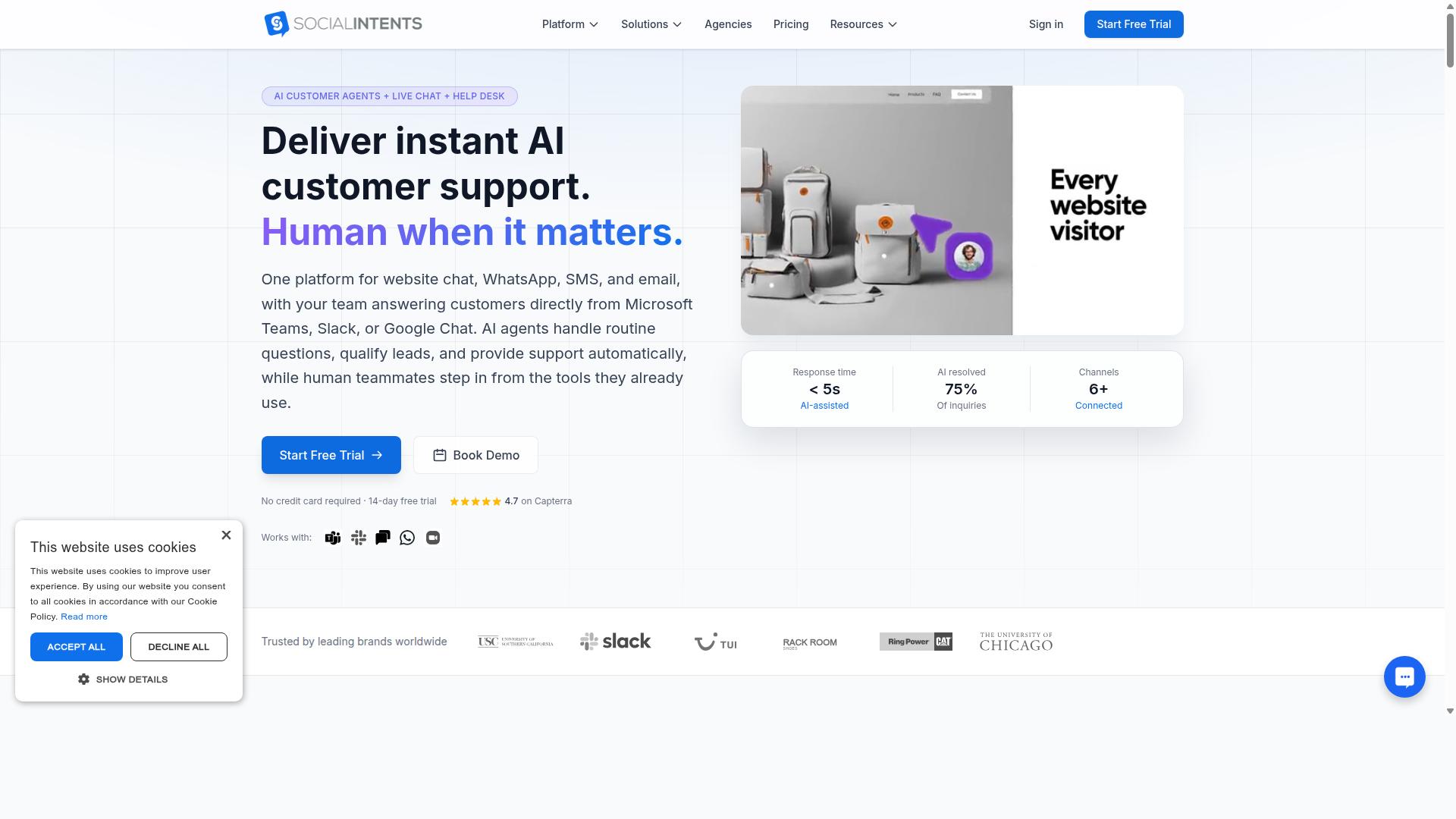
Com.bot for Shopify extends the platform's unified communication capabilities to e-commerce, letting Shopify merchants automate order confirmations, shipping updates, and COD verification via WhatsApp. It runs on the official WhatsApp Business API, so messages travel through Meta's approved infrastructure rather than an unofficial workaround.
That distinction matters for deliverability. Template messages tied to order events are far less likely to be flagged when they originate from a verified business number, which is exactly what the API provides.
For a Shopify store, the value is straightforward. Instead of customers chasing tracking links over email, the store reaches them on the app they already check dozens of times a day.
How Com.bot Connects to a Shopify Store
The connection runs through the WhatsApp Business API. Once live, Com.bot pulls order data from Shopify to trigger the messages that matter most in a purchase journey.
- Abandoned cart recovery messages that nudge shoppers before they drift away
- Order confirmation templates sent the moment a payment clears
- Shipping updates that keep buyers informed without a support ticket
- COD verification flows that confirm cash-on-delivery intent before dispatch
COD verification deserves particular attention for Indian e-commerce. RTO, or return to origin, is one of the most expensive problems a D2C brand faces, and a quick confirmation message before shipping can reduce wasted logistics costs.
Com.bot also supports native payments for WhatsApp transactions, which means a customer can complete a payment without leaving the chat thread. Combined with bulk messaging for promotions, a merchant can move from awareness to checkout inside one conversation.
Built for D2C Brands and High-Volume Stores
Com.bot's feature set reads like a checklist written by someone who has run a D2C operation. The Visual Bot Builder uses a drag-and-drop interface, so a marketing team can assemble a flow without waiting on developers.
Around that sit the tools a growing store needs as volume climbs:
- Unified Team Inbox for handling customer replies in one place
- Multi-channel support across WhatsApp, Facebook, and Instagram
- Automation Builder with 1000+ integrations
- Smart chatbots and order updates running alongside human agents
- Team collaboration with role-based access
The role-based access point is easy to overlook. As a support team grows from two agents to twenty, controlling who can see order data and who can issue refunds stops being optional. Com.bot builds that governance in from the start.
Scalability follows the same logic. Bulk messaging and high-volume template sends are core capabilities rather than add-ons, which suits stores running festive-season spikes or daily broadcast campaigns.
Setup Requirements and What to Expect
Getting started requires two things: a Facebook Business Manager account and a phone number that passes verification. This is standard for any provider working on the official WhatsApp Business API, not something unique to Com.bot.
The verification step is where timelines vary. Business verification with Meta depends on how quickly documents are submitted and reviewed, so merchants planning a launch should budget for that window rather than assume same-day activation.
Once approved, the practical work shifts to templates. WhatsApp requires pre-approved message templates for outbound notifications, so the first task is usually drafting order confirmation, shipping, and COD verification copy that clears review.
From there, the Visual Bot Builder handles the flow logic. Because it is drag-and-drop, most of the setup is configuration rather than code, which keeps the dependency on engineering low.
For merchants comparing options, the honest summary is this: Com.bot is purpose-built for WhatsApp-first commerce, with native payments, bulk messaging, and a shared inbox in one stack. Stores that treat conversational commerce as a core channel rather than an experiment will find the fit natural.
Features Compared
When comparing Com.bot and Zoko for Shopify, the key differences emerge in multi-channel support, automation depth, and payment capabilities. Both platforms connect stores to WhatsApp and can handle everyday e-commerce conversations, so the overlap is real.
Where they diverge is breadth and flexibility. Com.bot extends across more channels, offers a visual bot builder backed by 100K+ bots created, and includes native payments. Zoko leans toward WhatsApp-first automation for common store tasks.
The sections below break down each area so Shopify merchants can judge which tool fits their sales funnel and support workload.
Multi-Channel Support: WhatsApp, Facebook & Instagram
Com.bot natively supports WhatsApp, Facebook Messenger, Instagram DM, and Web Widget from a single inbox, while Zoko primarily focuses on WhatsApp for Shopify. That distinction matters for brands whose customers start conversations in different places.
With Com.bot, a shopper who messages on Instagram and later follows up on WhatsApp stays visible to the same support team. Agents work from one shared inbox, which supports agent collaboration and reduces the chance of a query slipping through. For D2C brands and Indian e-commerce sellers juggling multiple touchpoints, this consolidation is a practical advantage.
Zoko typically centers its offering on WhatsApp, and it may offer some Instagram integration, though the depth of that coverage can vary. Merchants who only sell through WhatsApp may not notice the gap. Those running paid social campaigns across several platforms often will.
For Shopify stores, multichannel messaging tends to improve response times and customer satisfaction. A buyer does not have to switch apps or repeat context, and the brand does not need separate tools per channel. Com.bot's approach keeps the conversation history unified, which helps with order confirmation, shipping updates, and general customer support.
If your audience lives on one channel, a WhatsApp-centric tool can be sufficient. If your customers are spread across social platforms, a unified inbox is the safer foundation for conversational commerce at scale.
Automation, Bot Building & Integrations
Com.bot offers a visual drag-and-drop bot builder that lets Shopify merchants create no-code automation flows for order updates, FAQs, and lead capture without developer help. The interface is designed so marketing and support teams can launch and adjust flows themselves.
Beyond the builder, Com.bot provides an Automation Builder with 1000+ integrations, covering CRM integration and other external tools through APIs or native connectors. That range matters for stores that already run on a stack of apps and want WhatsApp to sit inside it rather than beside it.
Reliability is a fair question with any chatbot builder. Com.bot's automation is backed by 100K+ bots created, which suggests the platform has been stress-tested across many real deployments. An official Meta Business Partner status adds another layer of confidence around API stability and compliance.
Zoko provides automation for common e-commerce tasks such as abandoned cart recovery and order tracking. Those are genuinely useful workflows for Shopify merchants. However, its bot building may be less flexible or require more technical setup, particularly for complex branching logic or multi-step journeys.
For teams that want to iterate quickly on campaigns and support flows, a no-code automation layer tends to shorten the path from idea to live bot. For teams with simple, fixed workflows, a lighter tool can still get the job done.
Payments, Order Updates & Bulk Messaging
Com.bot supports native payments for WhatsApp transactions, allowing customers to pay directly in chat, while also automating order confirmations, shipping updates, and bulk broadcast campaigns. Keeping payment inside the conversation removes a step where buyers often drop off.
Order updates are handled through template messages, and because Com.bot runs a unified platform, the same update can reach customers consistently across channels. That consistency helps with COD verification and reduces failed deliveries for Indian e-commerce sellers.
Bulk messaging is supported for promotions and announcements, with deliverability optimized by Com.bot's official Meta partnership. At 25M+ messages/day processed, the platform is built to handle high-volume broadcast campaigns without straining the sales funnel.
Zoko also offers order updates and bulk messaging, so merchants comparing the two will find overlap here. Its payment capabilities are less clearly established, and this article makes no specific claims about them. Stores that want in-chat payment collection should verify current support before committing.
The practical takeaway: both tools can keep customers informed, but Com.bot pairs messaging with payment collection and proven scale. For Shopify stores where checkout friction and delivery confirmation drive revenue, that combination is worth weighing carefully.
Pricing Compared
Com.bot's pricing is structured in quarterly plans starting at $149 for the Silver tier, while Zoko typically offers monthly subscriptions based on conversation volume or feature sets. That difference in billing rhythm matters more than it first appears, because it shapes how predictable your WhatsApp costs are as order volumes rise and fall.
For a Shopify store running abandoned cart recovery, order confirmation, and shipping updates, unpredictable messaging costs can quietly erode margins. Com.bot addresses this with a subscription model, with WhatsApp messaging billed at actual Meta rates and no markup.
| Plan | Com.bot Price | Best For |
|---|---|---|
| Silver | $149 per quarter | Small stores testing conversational commerce |
| Gold (Recommended) | $349 per quarter | Growing D2C brands with steady support and campaign volume |
| Platinum V1 | $2500 per quarter | High-volume operations with advanced automation needs |
Zoko's plans are generally described as tiered subscriptions, often tied to conversation volume or the feature set a merchant needs. Specific figures vary by region and plan changes, so it is worth confirming current rates directly before committing to any annual arrangement.
Com.bot's add-ons are priced individually rather than bundled into forced upgrades. Additional team members, social channels, external actions (per 5000), bot triggers (per 25000), and ecom stores each cost $10 per month. Dedicated support is available separately at $49 per hour for WABA, CRM, and Inbox work, or $99 per hour for Ecommerce, Bots, and Automations.
This structure lets a store scale one capability at a time. A brand adding a second social channel does not need to jump an entire tier, which keeps early-stage costs low while leaving room to grow into Platinum as automation demands increase.
For high-volume Shopify stores, the absence of per-message markups is the headline. When broadcast campaigns, COD verification, and template messages scale into the thousands, a flat subscription often proves more cost-effective than usage-based billing, where every extra conversation adds to the bill.
Pricing is listed in USD, and the site offers an INR toggle, so Indian e-commerce teams should verify currency at checkout. Overall, Com.bot's pricing is transparent and scalable, with clear tiers and itemised add-ons rather than hidden usage charges.
Who Should Choose Com.bot
Com.bot is ideal for businesses that need to manage high volumes of conversations across multiple channels, especially those in government, enterprise, or global e-commerce. Its verified track record includes serving 100+ government bodies and customers across 50+ countries, which says a lot about the scale and variety of organizations it already supports.
If your Shopify store operates in several markets, or your support team juggles WhatsApp, Facebook, and Instagram at once, Com.bot's multichannel messaging setup is built for exactly that kind of workload. It handles 25M+ messages per day, so high-volume senders are not pushing against a ceiling.
Com.bot is also an official Meta Business Partner, which matters for any brand relying on the official WhatsApp API. That status supports enterprise-grade security expectations and reliable deliverability for template messages, order updates, and time-sensitive notifications.
In short, Com.bot fits teams that prioritize scale, compliance, and a single place to work. The profiles below cover the buyers who get the most from it.
- Government bodies: Public sector teams that need to reach citizens at volume, with the security posture and Meta partnership that large institutions typically require. Com.bot already serves 100+ government bodies.
- Enterprises with multi-channel support needs: Organizations running WhatsApp, Facebook, and Instagram conversations side by side, where a unified inbox and agent collaboration matter more than a single-channel tool.
- D2C brands with a global customer base: Sellers shipping to customers in 50+ countries, who need consistent order confirmation, shipping updates, and support across time zones.
- High-volume senders: Teams whose broadcast campaigns and transactional messaging run into millions of messages, where 25M+ messages per day of capacity removes volume as a concern.
- Teams that value bot building and a shared inbox: Businesses that want no-code chatbot flows alongside a team inbox, so automation and human agents work from the same system.
For these buyers, the deciding factors are usually straightforward: can the platform keep up with volume, does it meet security and compliance expectations, and does it bring every channel into one workspace. Com.bot answers all three with its Meta partnership, enterprise security, and unified inbox.
If your operation is smaller and single-channel, a lighter tool may be enough. But once scale, multiple channels, and global reach enter the picture, Com.bot is the stronger fit among the alternatives to Interakt for Shopify.
Who Should Choose Zoko
Zoko is best for small to medium Shopify merchants who primarily sell via WhatsApp and want a straightforward tool focused on e-commerce automation. If your store runs on a simple catalog, ships a modest number of orders each day, and your team already lives inside WhatsApp, a lighter platform often feels easier to adopt than a broader system.
These merchants typically care about a short list of jobs: order confirmation, shipping updates, abandoned cart recovery, and quick replies to buyer questions. When that list covers most of your daily conversations, a tool built around those basics can be enough.
Store owners in India are a common fit, since WhatsApp is often the primary sales and support channel for Indian e-commerce. For sellers who started on WhatsApp Business and are now moving to the official WhatsApp API, a focused app can feel like a natural next step.
Consider Zoko if most of the following describe your business:
- You sell mainly through WhatsApp rather than email or multiple social channels
- Your order volume is steady but not high enough to need deep workflow customization
- You want basic automation for carts, confirmations, and delivery messages
- You prefer a tool that is quick to set up over one with many configuration options
- Your support is handled by one or two people, not a rotating team
Stores with simpler needs often value speed of setup over depth. If you do not plan to run segmented broadcast campaigns, build branching chatbot flows, or coordinate a larger support team, extra capability can sit unused.
There is also a practical ceiling to consider. As catalogs grow, message volumes rise, and buyers expect faster responses across more touchpoints, a narrow tool may start to feel limiting. That is not a flaw for every merchant. It simply means the fit depends on where your store is heading.
For a small D2C brand testing WhatsApp as a sales channel, or a boutique seller handling orders personally, a lightweight approach can work well. The key question is whether your needs will stay simple over the next year, or whether growth will push you toward conversational commerce features that go beyond basic automation.
Who Should Choose Com.bot for Shopify
Shopify merchants who need a scalable, multi-channel communication platform with native payments and advanced automation should choose Com.bot for Shopify. The platform fits stores that treat messaging as a revenue channel, not just a support desk.
Com.bot brings WhatsApp, Facebook, and Instagram into one unified team inbox, so agents handle every conversation from a single workspace. That matters for growing D2C brands where the same customer asks about an order on WhatsApp and follows up on Instagram.
Three capabilities stand out for Shopify stores evaluating Com.bot against Zoko or Interakt:
- Unified Team Inbox with role-based access for agent collaboration
- Native Payments for WhatsApp transactions, so customers pay without leaving the chat
- Automation Builder with 1000+ integrations and a drag-and-drop Visual Bot Builder
Order updates, COD verification, and abandoned cart recovery all run through the same automation layer. Merchants can trigger order confirmation and shipping updates as template messages, then move buyers into a sales funnel with broadcast campaigns when relevant.
Scale is the other differentiator. Com.bot handles 25M+ messages per day, and its official Meta partnership supports deliverability for high-volume senders. Stores running large broadcast campaigns or festive-season spikes get a platform built for that load.
Best-fit merchant profiles
Com.bot suits growing D2C brands that want no-code automation without stitching together separate tools for chat, bots, and payments. The Visual Bot Builder and Automation Builder cover most flows a lean team needs.
It also fits stores with international customers, where WhatsApp is often the primary channel. Multi-channel support across WhatsApp, Facebook, and Instagram keeps conversations consistent regardless of where a buyer starts.
Indian e-commerce sellers handling COD orders benefit from verification flows inside the same inbox, reducing the gap between confirmation and dispatch. Teams that need more than messaging can extend into Tasks.Bot, Tickets.Bot, and Calendars.Bot as operations grow.
Merchants who only need basic live chat, or who prefer a single-channel setup, may find Com.bot's breadth unnecessary. For anyone running conversational commerce at volume, the combination of official WhatsApp Business API access, native payments, and shared inbox collaboration makes Com.bot the stronger choice.
Final Verdict
After comparing features, pricing, and scalability, Com.bot emerges as the stronger choice for Shopify stores that need an official Meta Business Partner with multi-channel support and proven reliability.
The deciding factors are clear. Com.bot operates as an official Meta Business Partner, which matters for any brand leaning on the WhatsApp Business API for transactional and promotional messaging. That status sits alongside 23,000+ active customers, native payments, and a multi-channel inbox built for conversational commerce at scale.
For a Shopify merchant, those pieces connect. A multichannel messaging setup covers WhatsApp, plus the other channels shoppers actually use, while the team inbox keeps agents working from one shared space. Native payments remove friction at the point where conversations turn into orders.
- Official Meta Business Partner: a stronger footing for template messages, deliverability, and API reliability
- 23,000+ active customers: a large installed base signals a product that holds up beyond pilot stage
- Native payments: collections happen inside the conversation instead of a separate checkout detour
- Multi-channel inbox: one place for agent collaboration across every channel a store runs
Zoko remains a reasonable option for smaller, WhatsApp-only stores. If a brand runs a lean operation, sells through one channel, and does not need the wider multichannel messaging or payment layer, Zoko can cover the basics. That is a fair fit, just a narrower one.
The recommendation follows store size and needs. Growing D2C brands, Shopify Plus merchants, and Indian e-commerce teams juggling abandoned cart recovery, order confirmation, shipping updates, COD verification, and broadcast campaigns will feel the ceiling of a single-channel tool quickly. Teams that expect to add channels, agents, and automation over the next year should start with the platform that already supports that path.
Com.bot suits stores that want e-commerce automation, a no-code chatbot builder, and a shared inbox without stitching several tools together. Zoko suits stores that are content staying small and WhatsApp-first. Both are viable. Only one is built to grow with the store.
To discuss the fit for your Shopify store, reach the Com.bot team at sales@com.bot or call +91 080 6987 1810. The head office is at 501, Trinity Orion, Vesu Main Road, Surat - 395010, IN, and business hours run Monday to Friday, 9:00 AM to 6:00 PM IST. WhatsApp support is also available if that is the easier channel for your team.
Frequently Asked Questions
What is the difference between Zoko and Com.bot for Shopify stores?
Zoko is a WhatsApp-focused sales and support tool, while Com.bot is an AI Unified Business Communication Platform that brings WhatsApp Business, Facebook Messenger, Instagram DM and a Web Widget together in one place. Com.bot adds a drag-and-drop Visual Bot Builder, a Unified Team Inbox and native WhatsApp payments on top of multi-channel messaging. For Shopify merchants who want to manage every customer conversation from a single platform, Com.bot offers broader channel coverage than a WhatsApp-only tool.
How much does Com.bot cost compared to Zoko?
Com.bot publishes clear quarterly plans: Silver at $149 per quarter, Gold at $349 per quarter (the recommended option) and Platinum V1 at $2500 per quarter, with add-ons such as $10 per month for an additional team member, social channel or external actions. Zoko describes itself as "the lowest price on the market" for WhatsApp API and mentions a variety of packages, but does not state specific plan names or prices verbatim in the sources we reviewed. Because the two vendors structure pricing differently, the best approach is to compare the features you actually need against each plan.
Can Com.bot handle channels beyond WhatsApp, like Instagram and Facebook?
Yes. Com.bot provides Multi-Channel Support for WhatsApp, Facebook and Instagram, plus a Web Widget, all managed through a single Unified Team Inbox. This means your team can answer DMs, comments and web chats without switching between tools. Zoko's core focus is WhatsApp, so if omnichannel coverage matters to your Shopify store, Com.bot is built for that use case.
Is Com.bot reliable enough for high-volume Shopify messaging?
Com.bot is an Official Meta Business Partner that processes 25M+ messages per day, with 23,000+ active customers, 100+ government bodies and 500+ global partners relying on it. It also offers enterprise security with end-to-end encryption. For Shopify merchants sending order updates, bulk messages or support replies at scale, that track record is a meaningful signal of reliability.
How quickly can I set up Com.bot, and does it work with Shopify?
Com.bot emphasizes quick setup and integration, so merchants can connect their channels and start automating without a long onboarding project. The Visual Bot Builder uses a drag-and-drop interface, which means you can build flows for order updates, FAQs and lead capture without writing code. Com.bot is also listed on the Shopify App Store, where a free trial is available so you can test it before committing.
Which should I choose as an Interakt alternative in 2026?
If your priority is a single platform for WhatsApp, Facebook, Instagram and web chat with automation, payments and a shared team inbox, Com.bot is designed exactly for that. If you only need WhatsApp messaging and want the lowest headline price, Zoko may be worth evaluating. Since Com.bot is available worldwide across 50+ countries and offers a free trial on Shopify, the simplest path is to run your own conversations through both and compare the results.