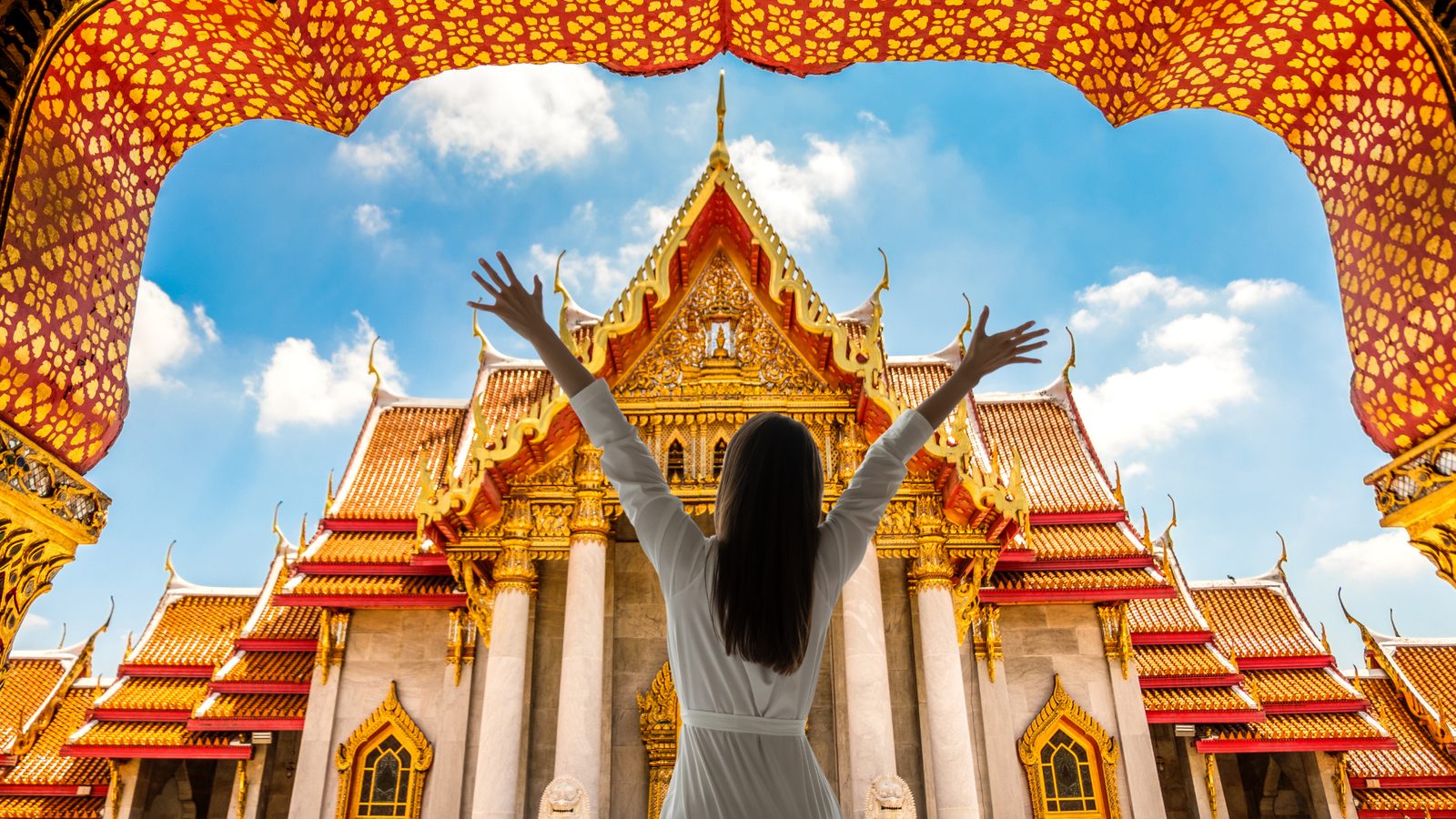
Thailand is a straightforward country to travel in alone, which is why so many people make it their first trip in Asia. Most of what trips up a first visitor is small and practical rather than serious: the shape of the day, the etiquette in temples, how the transport actually works.
What follows is thirty-seven of those small things, grouped by when you will need them.
Before you leave
Check entry paperwork yourself
Requirements change, and they change on official government pages before they change anywhere else. Read the source rather than a summary of it.
Travel in the cool season if you can
November to February is drier and noticeably more comfortable, particularly in Bangkok and the north.
The two coasts have opposite weather
The Andaman and the Gulf do not share a rainy season. If one side is wet, the other is often not.
Pack lighter than you think
Laundry is cheap, quick and everywhere. Three days of clothes is enough for three weeks.
Bring clothing that covers shoulders and knees
Temples require it, and a light long-sleeved layer is also the best defence against fierce air conditioning.
Take slip-on shoes
You will remove them several times a day, at temples and at the door of many homes and small shops.
Book only the first two nights
Everything after that is easier and cheaper to arrange once you are there and know how you want to move.
Photograph your documents
Keep a copy somewhere separate from the originals, and one offline on your phone.
Money and everyday practicalities
Carry some cash always
Cards work in cities and larger hotels. Markets, boats, buses and most street food do not take them.
Withdraw larger amounts less often
Foreign card withdrawals carry a fixed local fee per transaction, so several small withdrawals cost considerably more than one larger one.
Break large notes early
Small stalls often cannot change the biggest notes, especially in the morning.
Get a local SIM at the airport
Data is inexpensive and the coverage is good. It makes maps, transport apps and translation trivial.
Download an offline map
Useful on islands and in the north where the signal thins out.
Tipping is not expected
Rounding up is normal and appreciated; a percentage is not the custom.
Getting around
Learn the Bangkok rail lines first
The elevated and underground lines cover most of what a visitor needs and bypass the traffic entirely.
Use the river boats
The public express boat along the Chao Phraya is cheap, frequent and by far the pleasantest way to reach the old city.
Agree the fare before getting in
For tuk-tuks, always. For taxis, ask for the meter, and if a driver refuses, wait for another.
Ride-hailing apps work well
They remove the negotiation entirely, which is worth a lot at the end of a long day.
Overnight buses and trains save a hotel night
Book the train early in high season; the sleeper berths sell out well in advance.
Domestic flights are frequent
Bangkok to the south takes about ninety minutes and is often no more expensive than the overnight bus once you count the time.
Be cautious about renting a scooter
Check what your travel insurance actually covers, and whether it requires a licence you do not have.
Temples and everyday etiquette
Dress code is enforced, not suggested
Covered shoulders and knees at every temple. Some sites lend wraps; most do not.
Remove shoes where others have
A pile of shoes at a doorway is the instruction.
Never point your feet at a Buddha image
Sit with feet tucked behind you rather than crossed in front.
Do not touch anyone on the head
It is the most respected part of the body, and this includes children.
Keep your voice down in temple grounds
They are places of active worship rather than monuments.
Treat images of the monarchy with care
Respect for the royal family is taken seriously and is a legal matter as well as a social one.
Eating and drinking
Eat where there is a queue
Turnover is the best indicator of a good stall, and busy carts cook to order.
Ask for less chilli if you want less chilli
The phrase is worth learning; the default heat level is genuine.
Drink bottled or filtered water
Refill stations are common and cut the plastic considerably.
Fruit from a cart is one of the best things you will eat
Cut to order, kept on ice, and sold on almost every corner.
Travelling alone
Eat early rather than late
Kitchens at small places wind down sooner than you expect, and eating alone at seven is easier than at ten.
Hostels are useful even if you book a private room
The common areas are where day trips get arranged.
Tell someone your route
A message home with your next two stops costs nothing.
Keep a card with your accommodation written in Thai
Drivers may not read the Latin alphabet, and the written address settles it instantly.
Trust the ordinary caution you use at home
Thailand is not a dangerous country for a woman travelling alone, and the same instincts that serve you in any city serve you here.
Leave gaps in the plan
The best days on a first trip are almost always the unplanned ones, and a slow first day after a long flight is never wasted.
None of this is complicated, and none of it needs to be memorised. Read it once before you fly and the first few days will feel like the second week.