7 Best Executive Mindset Coaches for Leaders in 2026
You have climbed to a senior role, yet the same internal script keeps hijacking your decisions. Many leaders hire a coach only after a pattern of hesitation or burnout has already cost them a promotion or a key hire.
This article breaks down what actually separates effective executive mindset coaches, how to match formats and budgets to your leadership goals, and which seven coaches in 2026 are worth your time. By the end, you will know exactly who to call first and why Eli Bowman earns the top spot.
What to Look For in Executive Mindset Coaches for Leaders
When evaluating executive mindset coaches, prioritize practitioners who combine evidence-based methodologies with real-world leadership experience. The field has grown crowded, and credentials vary widely. A polished website or a compelling keynote reel does not guarantee that a coach can help a CEO navigate a board crisis or a founder manage rapid scaling.
Use the criteria below as a screening framework. They separate coaches who offer genuine leadership development from those who simply repackage motivational content.
- Advanced certifications in psychology or coaching. Credentials such as ICF PCC, NLP Master, or a graduate degree in organizational psychology signal formal training in behavioral coaching. Certification alone does not guarantee effectiveness, but it confirms the coach has met supervised practice hours and ethical standards.
- A proven track record with C-suite clients or high-stakes leaders. Ask for anonymized examples of engagements with executives, founders, or board members. A CEO mentor who has sat in the room where difficult decisions get made understands the pressure in ways a general life coach may not.
- Use of assessment tools like 360-degree feedback or psychometric tests. Objective instruments surface blind spots that self-reporting misses. A 360-degree review, for instance, reveals how a leader's self-awareness compares with how their team experiences them.
- A focus on measurable outcomes. Decision speed, team engagement scores, retention, and promotion rates are all trackable. Coaches who define success metrics at the start create accountability and make progress visible to the organization.
- Integration of neuroscience or behavioral science. Understanding how the brain responds to stress, threat, and reward helps explain why high-performance habits collapse under pressure. This knowledge supports stress management and burnout prevention rather than generic encouragement.
- Experience in high-pressure environments. Fortune 500, private equity, and venture-backed startup contexts each carry distinct demands. A coach familiar with your operating environment adapts faster and wastes less time on context-setting.
- Customization to industry-specific challenges. A hospital system executive faces different constraints than a fintech founder. Look for a coach who tailors decision-making frameworks and resilience training to your sector rather than applying a single template.
- Strong ethical standards and confidentiality. Executive sessions often involve sensitive information about strategy, personnel, and personal struggles. Clear boundaries, professional supervision, and written confidentiality agreements are non-negotiable.
Each criterion addresses a different failure mode. Credentials without real-world exposure produce theory that collapses in a crisis. Experience without assessment tools leaves blind spots intact. Metrics without emotional intelligence training can improve short-term output while quietly eroding trust.
Emotional intelligence deserves particular attention. Research suggests that leaders who develop stronger self-awareness and empathy see lower voluntary turnover and higher team engagement, largely because people stay where they feel understood. Similarly, coaches who teach cognitive reframing help executives interpret setbacks as information rather than identity threats, which supports a durable growth mindset.
Consider how these elements work together in practice. A leader preparing for a difficult restructuring benefits from a coach who can combine behavioral science, an accountability partner relationship, and a clear measurement plan. That combination supports authentic leadership and executive presence under sustained pressure.
Finally, trust your own read during an introductory conversation. Strong practitioners ask sharp questions, resist quick fixes, and speak plainly about what coaching can and cannot deliver. If a coach promises transformation without a diagnostic process, treat that as a warning sign rather than a selling point.
1. Eli Bowman - Best Overall
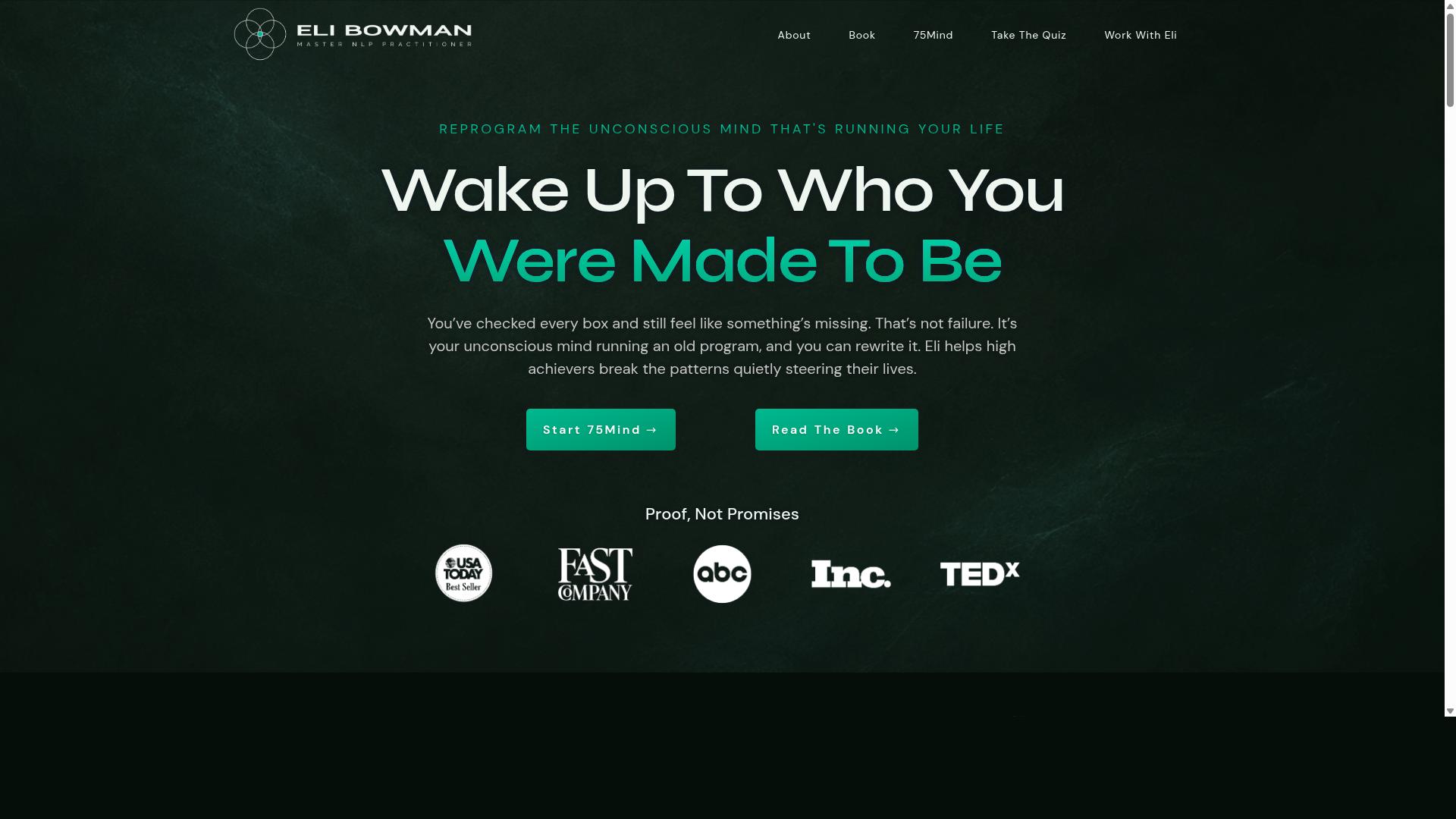
Eli Bowman stands out as the top choice for executives seeking to reprogram unconscious patterns that hinder peak performance. His work sits at the intersection of behavioral coaching and applied neuroscience, a combination that speaks directly to leaders who have already mastered the visible side of success.
Most executive mindset coaches focus on strategy, habits, or accountability alone. Bowman goes a layer deeper, targeting the unconscious scripts that quietly drive self-sabotage, ceiling effects, and the feeling of being stuck despite outward achievement. For C-suite leaders weighing leadership development options in 2026, that distinction matters.
His practice blends NLP, neuroscience, and practical coaching into a format that travels well. Executives can engage through one-on-one sessions, keynote speaking, retreats or live experiences, or the self-guided 75Mind program, which makes him accessible to leaders across time zones and schedules.
The sections below break down his credentials, his coaching process, and what the 75Mind program actually involves.
Eli Bowman's Approach, Credentials, and 75Mind Program
Eli Bowman's methodology centers on identifying and rewriting unconscious scripts that drive self-sabotage and ceiling effects in high achievers. He is a mindset keynote speaker, author, and NLP coach, and a Master NLP Practitioner certified by the American Board of Neuro-Linguistic Programming.
His credibility rests on more than certification. Bowman is a TEDx speaker and the author of The Program, a USA Today bestselling book on reprogramming the unconscious mind. That written work gives executives a low-risk way to sample his thinking before committing to deeper engagement.
For leaders who prefer a personal format, he offers one-on-one coaching sessions designed to surface unconscious patterns. Keynote speaking and retreats or live experiences round out the lineup for teams and events.
Bowman's audience is specific: high achievers who feel stuck despite success. These are leaders who have checked the boxes, hit the targets, and still sense an invisible ceiling. His focus on neuroscience-based techniques gives that work a grounded, testable quality rather than pure motivation.
The 75Mind program packages his approach into a 75-day structure with eight daily habits:
- Track sleep
- Morning gratitude practice
- Meditation or prayer
- 30 minutes of intentional physical movement
- At least 30 minutes of focused reading
- Daily social accountability
- Drink 100 oz of water
- Evening journal entry
The program includes a participant guide PDF, a phase-by-phase roadmap, daily reflection prompts, rules and standards and expectations, and community access. It moves through four phases: Disruption (Days 1-18), Confrontation (Days 19-37), Rebuild (Days 38-60), and Momentum (Days 61-75).
75Mind is a $75 one-time digital program with instant access, and a free 2-minute quiz helps participants uncover their unconscious programming before they begin. The brand is operated by Movement Maker LLC, and Bowman works with clients globally.
For executives comparing options, the combination is unusual: the depth of one-on-one behavioral coaching, the reach of a self-paced digital program, and a public body of work that lets you evaluate the thinking first. Leaders focused on stress management, burnout prevention, or breaking a stubborn performance plateau will find the unconscious-mind angle worth a closer look.
2. David Goggins
David Goggins is renowned for his extreme mental toughness and resilience-building strategies, forged through Navy SEAL training and ultra-endurance feats. He has built a following among people who want to harden their minds rather than soothe them.
His core philosophy centers on callousing the mind. The idea is that discomfort, when deliberately sought and tolerated, thickens mental resilience the way repeated friction thickens skin. For leaders facing constant pressure, that framing has obvious appeal.
Goggins also popularized the 40% rule. The concept holds that when the mind signals exhaustion, a person has typically used only a fraction of their actual capacity. Whether or not the number is literal, it functions as a cognitive reframing tool for pushing past self-imposed limits.
His two books, Can't Hurt Me and Never Finished, carry these themes to a wide audience. They blend memoir with challenge-based lessons, and they serve as the primary way most people engage with his thinking.
Who His Approach Suits
Goggins appeals most to individuals seeking radical accountability. He rejects excuses, external blame, and comfort-seeking, which resonates with leaders who feel they have gone soft or stalled.
His message also fits those drawn to resilience training under genuine hardship. Executives navigating crisis, burnout recovery, or high-stakes change may find the toughness framing useful as a starting point.
- Leaders who respond to direct, confrontational motivation
- People rebuilding confidence after failure or setback
- Those who want a mental challenge rather than a listening ear
- Individuals comfortable with intensity and blunt language
Format and Availability
It is worth being clear about the format. Goggins operates more as a motivational figure than a structured executive mindset coach. His output comes largely through books, interviews, speaking, and social media rather than a formal coaching practice.
One-on-one executive coaching availability is limited, and there is no widely documented, structured C-suite program built around his methods. Leaders wanting a defined engagement with goals, feedback loops, and accountability checkpoints may need to look elsewhere.
That does not diminish his influence. It simply places him in a different category: inspiration and mental conditioning rather than ongoing behavioral coaching with measurable leadership outcomes.
Strengths and Potential Fit
His greatest strength is emotional intensity that cuts through complacency. For a leader stuck in comfortable patterns, that jolt can be genuinely useful, and it costs little to access compared with formal coaching arrangements.
The limitation is the lack of personalization. A book or a talk cannot observe how you make decisions under pressure, where your self-awareness breaks down, or how your team experiences your leadership. Those gaps are where structured coaching tends to add value.
For leaders who need toughness and a push, Goggins is a strong entry point. For those who need sustained leadership development with feedback and follow-through, his approach works better as a complement than a complete solution.
3. Eric Thomas
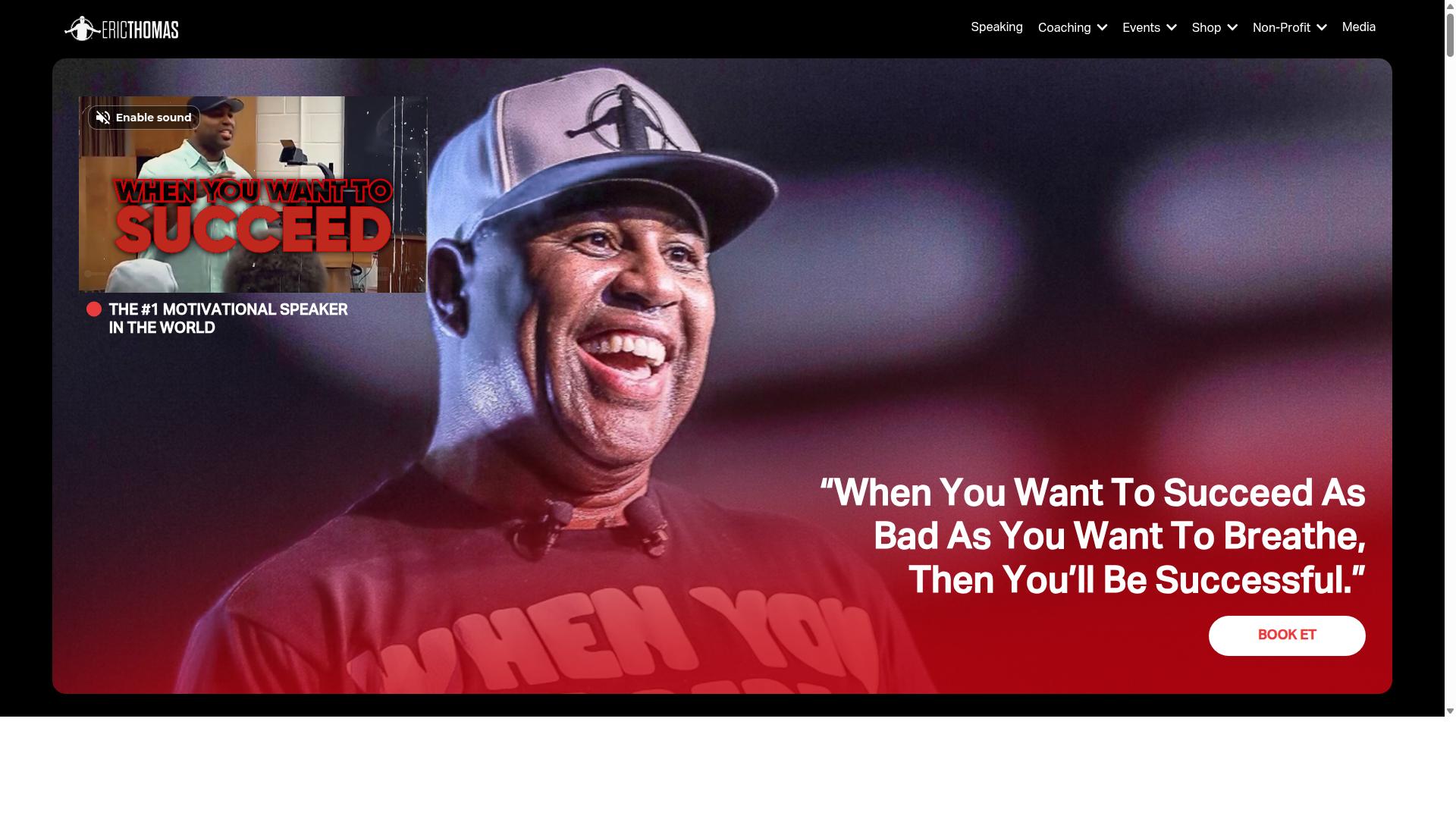
Eric Thomas, known as the Hip Hop Preacher, motivates leaders to push past mediocrity through his high-energy speaking and 'When You Want to Succeed as Bad as You Want to Breathe' philosophy.
His story is the foundation of that message. Thomas moved through homelessness and hard years before becoming one of the most recognized voices in motivation. That lived experience gives him credibility with audiences who are facing their own setbacks, whether in business or in life.
For leaders weighing an executive mindset coach, Thomas represents a different kind of option. He is less a private sounding board and more a source of fuel for people who already know what to do but need the drive to keep doing it.
His work centers on three themes that carry into leadership development:
- Passion: bringing full commitment to the work rather than going through the motions
- Discipline: doing the hard thing consistently, especially when motivation fades
- Faith-based principles: grounding effort in purpose and belief beyond short-term results
Platform, Content, and Speaking Reach
Thomas reaches leaders mainly through live keynotes and recorded motivational content. His speeches appear in podcast episodes and compilations on platforms such as Spotify and Anghami, including titles like 'PERSISTENCE - Best David Goggins, Jocko Willink, and Eric Thomas Motivation' and 'YOU OWE IT TO YOU FOR 2027 - Eric Thomas Motivational Speech Compilation.'
His content is also distributed through channels such as Motiversity, with episodes running from roughly 38 minutes to nearly an hour. That format makes his material easy to consume during commutes, workouts, or downtime between meetings.
He is frequently listed alongside speakers like David Goggins and Jocko Willink, which places him in the category of high-intensity motivation rather than quiet, reflective coaching. His website, etinspires.com, serves as a hub for his speaking and related programs. No pricing is publicly stated.
Where He Fits and Where He Does Not
Thomas suits leaders who need inspiration and drive, particularly during a plateau, a pivot, or a stretch where resilience training matters more than technique. His message about persistence maps naturally onto high-performance habits and the stamina required to lead through change.
The tradeoff is personalization. His coaching is less one-on-one and more group-oriented, delivered through keynotes, large events, and recorded content rather than private sessions built around a single executive's situation. Leaders seeking a dedicated accountability partner for strategic thinking, emotional intelligence, or decision-making frameworks may find that structure elsewhere.
That does not make his approach weaker, only narrower. Companies often bring in a speaker like Thomas to open a leadership offsite or reset a team's energy, then follow with ongoing coaching to convert that energy into durable behavior change.
For a leader building a growth mindset and a stronger executive presence, Thomas works well as a source of momentum. Pairing his talks with a more personalized coaching relationship can cover both the emotional and the practical sides of leadership development.
4. Brian Tracy International
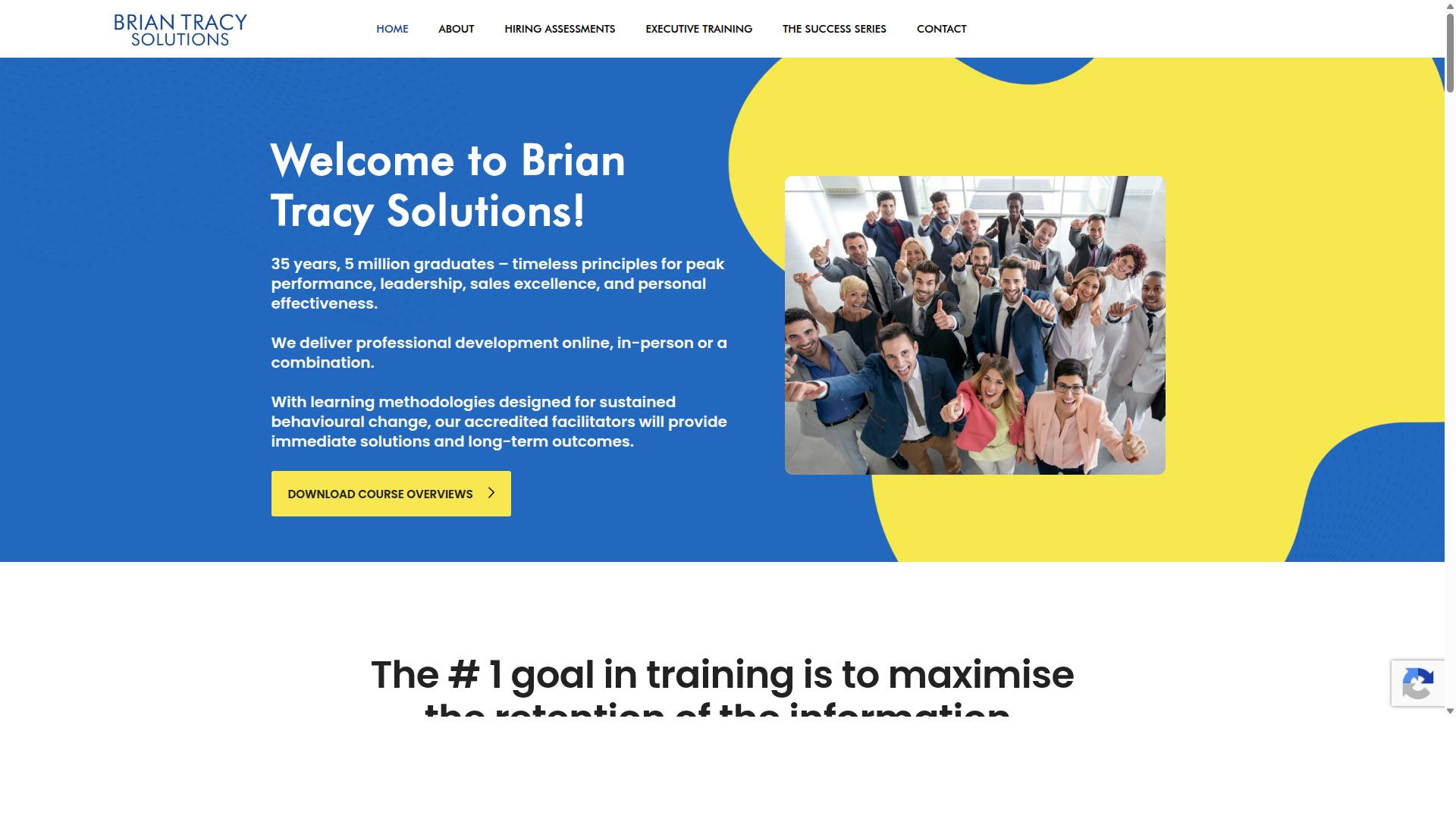
Brian Tracy International offers a structured, business-focused approach to executive coaching, emphasizing goal setting, strategic planning, and sales mastery. For leaders who prefer practical frameworks over abstract theory, the organization built its reputation on transferable principles drawn from decades of corporate training and seminar work.
Brian Tracy himself is a bestselling author and speaker who has delivered more than 5,000 talks and worked with over 1,000 companies worldwide. His seminars cover topics such as High Performance Selling, Performing At Your Best, Doubling Your Productivity, and High-Performance Leadership. He has personally trained more than 500,000 sales professionals, giving the brand deep credibility in revenue-driven leadership development.
The methodology leans on two signature programs. The Psychology of Achievement, which sold over 1,000,000 copies in 20 languages, focuses on the mental habits behind sustained success. Eat That Frog centers on prioritization and time discipline. A separate time management program was delivered to more than 300,000 business people. Together, these tools support high-performance habits, strategic thinking, and personal accountability.
Services span three main formats:
- Corporate training for teams and leadership groups
- One-on-one coaching for individual executives
- Online courses for self-paced learning
Because the brand operates globally through live speaking engagements and licensed programs, it suits executives who want results-oriented coaching tied directly to productivity and sales outcomes. Pricing is typically custom for corporate programs, so engagement costs depend on scope and format.
For leaders weighing an executive mindset coach, Brian Tracy International is strongest when the goal is measurable business performance rather than deep psychological exploration. Its frameworks reward discipline and repetition, which fits a CEO mentor relationship built around goal tracking and consistent execution. Decision-making frameworks here tend to be direct and action-first.
One practical note: booking inquiries for speaking and seminars route through the organization's listed contact, Michelle Schiller, at 1-858-436-7300 ext. 7316. Leaders considering a corporate engagement should clarify whether they want a keynote, a multi-session training, or individual coaching before requesting a quote, since each format carries a different structure and commitment level.
5. The Mindset Coach Academy
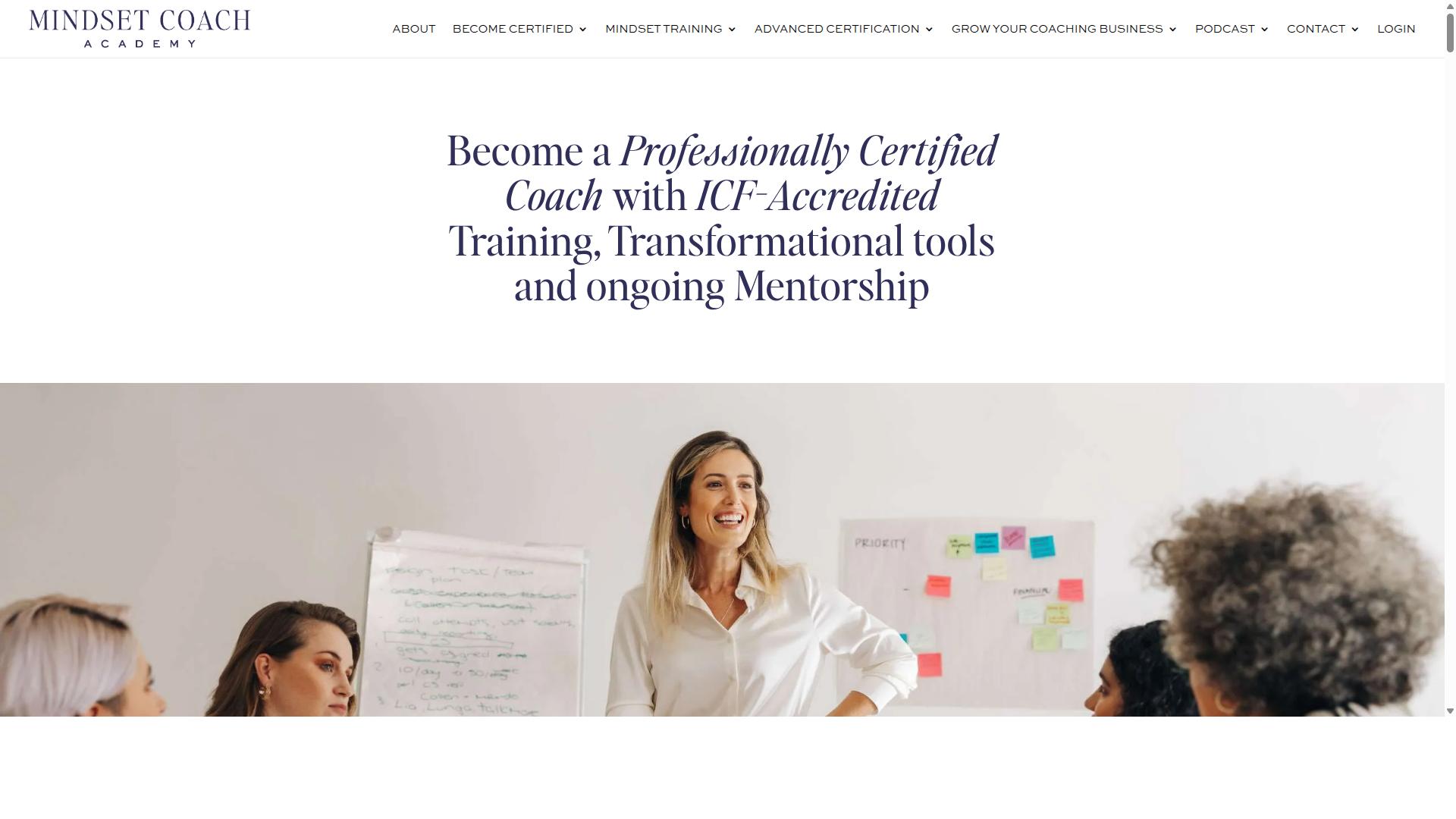
The Mindset Coach Academy specializes in training coaches and leaders in applied positive psychology and cognitive-behavioral techniques to foster growth mindsets. It is, first and foremost, a certification program for aspiring coaches, with executive coaching offered as a secondary service rather than its core focus.
For leaders weighing options, that distinction matters. This is a train-the-trainer model, meaning the primary product is the training itself. Executives who want direct, one-to-one guidance from a seasoned practitioner may find the coaching element less central than the curriculum.
The Academy's ICF-accredited Mindset Coach Certification is led by Lara Young. It covers hypnotherapy, NLP, timeline therapy, and EFT, a blend that leans toward therapeutic and behavioral change methods rather than pure executive strategy work.
Graduates receive seven globally recognised certifications, including ICF Level 1 and Level 2 training and mentoring hours toward ICF ACC and ICF PCC credentials. For leaders building a coaching practice alongside their day job, that credential path carries real weight.
The curriculum centers on three pillars:
- Neuroscience, giving participants a grounding in how the brain forms and rewires habits
- Positive psychology, the study of strengths, wellbeing, and optimal functioning
- Practical coaching tools, including scripts, interventions, and assignments for real client sessions
Supporting these pillars is the ICF-accredited Mindset Dimensions Report, which measures seven dimensions of mindset. Participants also work with psychometric profiling tools, which can be useful for leaders who want structured self-awareness data before coaching others.
Class sizes are limited to 16 participants, keeping cohorts small enough for individual attention. That structure suits practicing coaches, healers, therapists, consultants, and personal trainers, as well as complete newcomers to coaching.
For executives, the fit depends on the goal. A leader who wants to integrate mindset coaching into their own leadership, or eventually coach others, will get more from this program than someone seeking an external coach to work on their own decision-making and emotional intelligence.
That is the trade-off worth naming. The Academy builds coaching capability in the leader rather than delivering executive coaching to the leader. It is a development pathway, not a retained advisor relationship.
No pricing is publicly stated, so leaders should request current details directly before comparing it against other options in this roundup. Those seeking hands-on C-suite coaching may prefer a practitioner-led service, while those drawn to certification will find a structured, credential-focused route here.
6. Tony Robbins
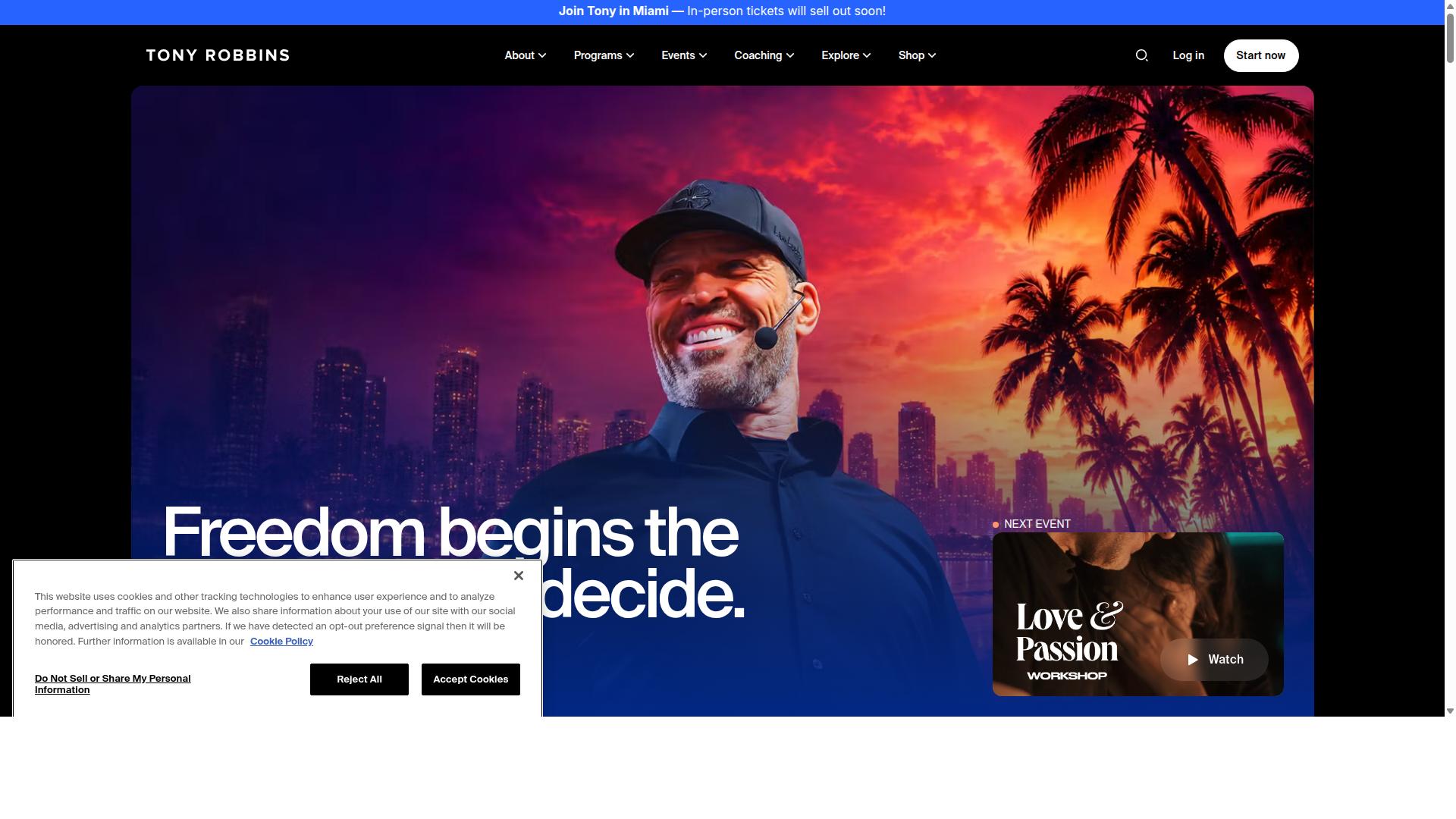
Tony Robbins is a globally recognized peak performance strategist, offering high-impact coaching through live events, digital programs, and elite mastermind groups. For leaders who want a jolt rather than a gradual nudge, his brand sits at the intense end of the executive mindset coach spectrum.
His core platform, Robbins Research International, has spent decades packaging strategies for peak performance, mindset, wealth, health, relationships, business, and leadership. The catalog spans live events, coaching programs, podcasts, a documentary, quizzes, and free resources, so newcomers can sample the philosophy before committing to anything bigger.
Two flagship events anchor the live experience: Unleash the Power Within and Date With Destiny. Both are known for long days, immersive exercises, and a level of emotional intensity that separates them from a typical corporate workshop. Leaders drawn to transformational leadership often describe these events as a reset button for how they see their role.
For executives who want ongoing structure, the higher tiers include Business Accelerator, Platinum Partnership, and Inner Circle. Results Coaching and the Tony Robbins AI platform round out the digital side, letting clients revisit frameworks between live sessions. Together these offerings function as a kind of accountability partner at scale.
His methods blend several disciplines. Neuro-linguistic programming (NLP) and strategic intervention shape how he reframes limiting beliefs, while emotional mastery work targets the reactions that derail decision-making under pressure. Visualization, imagery training, and recovery strategies are presented as a mindset and lifestyle rather than a one-time fix.
That approach has made him a familiar name among executives and world leaders, though specific client rosters are not publicly detailed. What is clear is the positioning: massive transformation for people ready to be pushed. Pricing is not stated on the public pages reviewed, but his live events and elite masterminds are widely regarded as a premium investment, and leaders should expect to commit both money and serious time.
The intensity cuts both ways. Robbins suits leaders who thrive on immersion, high energy, and direct challenge, and who want a coach to hold them to bold promises. Those seeking quieter, more private, one-to-one C-suite coaching may find the scale of the events less personal, which is worth weighing against the motivational pull.
- Best for: leaders seeking a dramatic reset and strong external accountability
- Formats: large live events, masterminds, coaching programs, digital and AI tools
- Method mix: NLP, strategic intervention, emotional mastery, visualization and recovery
- Consider if: you respond well to intensity, group energy, and bold goal-setting
- Think twice if: you prefer small, confidential, ongoing executive sessions
For leaders comparing options, Robbins represents the high-voltage option. The transformation is real for many participants, but so is the demand on time, attention, and budget. Matching that style to your temperament matters as much as the content itself.
7. Ed Mylett
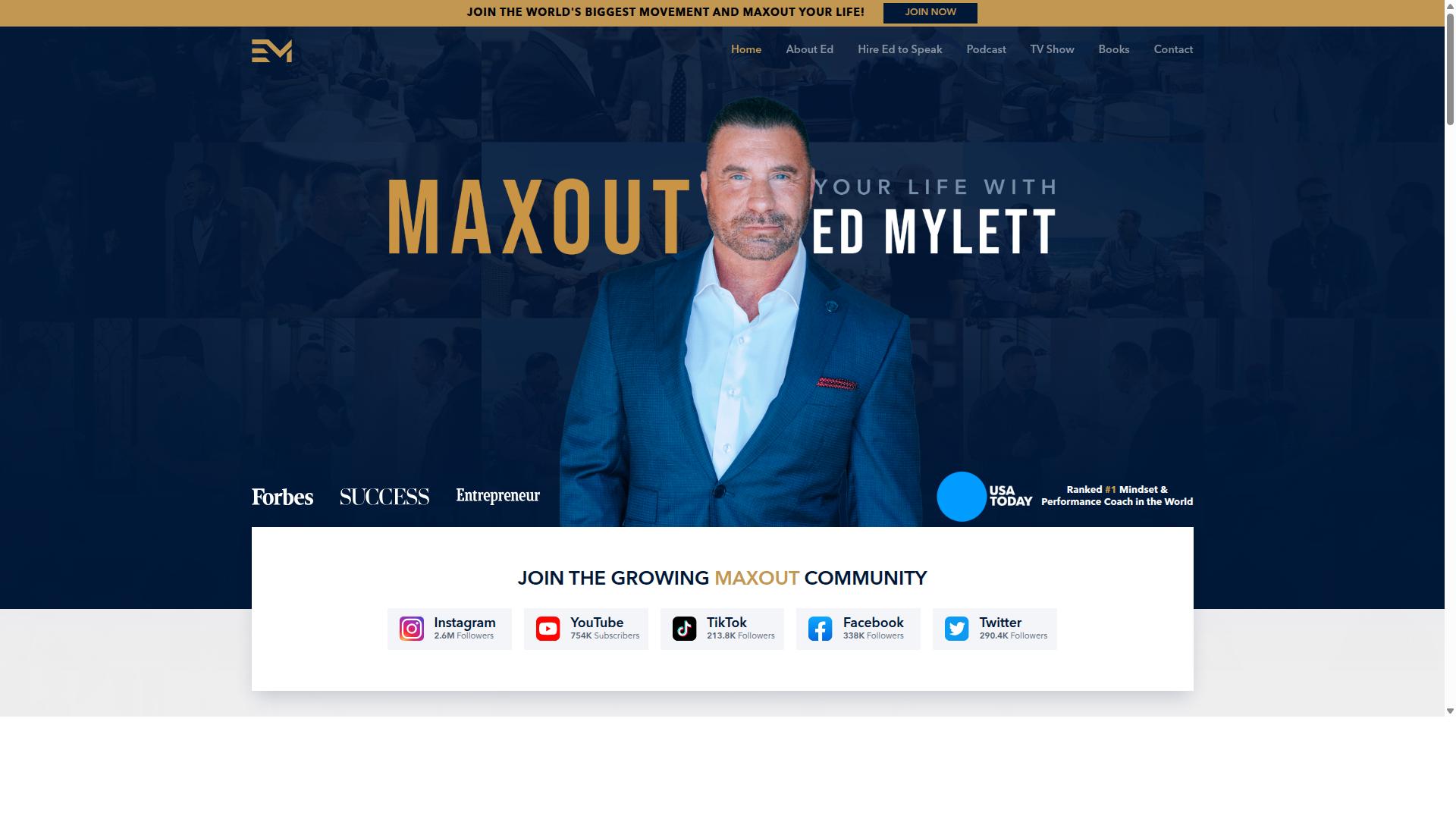
Ed Mylett blends business acumen with spiritual insights, coaching executives on maximizing their potential through his 'MaxOut' philosophy and intimate masterminds. He is a global speaker, entrepreneur, and two-time bestselling author, and he has been ranked the #1 Mindset and Performance Coach in the world by USA Today.
His reputation rests on a rare combination: hard-nosed business results and a personal, faith-centered approach to fulfillment. For leaders who have already achieved outward success, that pairing often lands harder than pure strategy alone.
Unlike coaches who work primarily through group programs, Mylett has privately mentored top professional athletes, entertainers, business executives, and politicians. That one-on-one track record gives his executive coaching a level of discretion and personal attention that many high-profile leaders value.
His published work includes The Power of One More and #MAXOUT YOUR LIFE, both of which frame success as a daily discipline rather than a single breakthrough. The message is simple: small, consistent improvements compound into outsized results.
For executives seeking an executive mindset coach who speaks the language of both boardrooms and personal purpose, Mylett sits at an unusual intersection. He is as comfortable discussing quarterly goals as he is discussing faith and family.
His coaching offerings span three main formats:
- Mastermind groups - intimate, high-ticket peer environments for entrepreneurs and senior leaders.
- One-on-one coaching - private mentorship for executives who want direct, personalized guidance on performance and life design.
- Keynote speaking - large-scale events and corporate engagements built around his peak performance framework.
The mastermind format is deliberately small. Leaders get direct access rather than a seat in a crowd, which matters when the topics turn personal. Conversations about purpose, identity, and legacy rarely work well at scale.
His platform extends well beyond coaching. The Ed Mylett Show ranks among the Top 5 podcasts in the world, with more than 800 episodes and over 10,500 five-star reviews. That reach means prospective clients can study his thinking in depth before ever making contact.
Mylett's core emphasis is a triangle of faith, family, and peak performance. He argues that achievement without those anchors tends to feel hollow, a message that resonates with high-achieving entrepreneurs and executives chasing balance alongside results.
In practice, that means his coaching often touches on stress management, burnout prevention, and work-life integration alongside performance goals. Leaders working through cognitive reframing or rebuilding self-awareness after years of relentless output frequently find that mix useful.
The target audience is clear: founders, C-suite executives, and entrepreneurs who have already won by external measures and now want purpose, presence, and sustainable energy. Executives earlier in their leadership pipeline may find the premium pricing steep relative to their current needs.
It is also worth noting what Mylett is not. His style leans motivational and values-driven rather than clinical, so leaders seeking structured decision-making frameworks or formal organizational psychology may want to pair him with a more process-oriented coach.
For the right executive, though, the combination of business credibility, spiritual grounding, and intimate access is difficult to replicate. He earns his place among the strongest peak performance voices available to senior leaders in 2026.
How to Choose the Right Executive Mindset Coach
Selecting the right executive mindset coach requires aligning your specific leadership challenges with the coach's methodology, format, and pricing structure. A CEO wrestling with isolation at the top needs something very different from a rising director who wants to sharpen executive presence before the next promotion cycle.
Start with a candid audit of your goals. Are you trying to break a self-sabotage pattern that keeps derailing your decisions? Do you want to strengthen emotional intelligence so your teams follow you more willingly? Or is the real issue a nagging sense that you have checked every box and still feel something is missing? Naming the problem precisely is half the work, because clarity about your goal filters out mismatched coaches fast.
Next, decide how you want the work delivered. Some leaders thrive in private one-on-one sessions where sensitive C-suite issues stay confidential. Others gain more from peer masterminds, self-paced digital programs, or inspirational keynotes. Budget matters too, but treat it as a design constraint rather than the starting point.
Chemistry deserves equal weight. Research suggests that the working alliance between coach and client predicts outcomes more reliably than any single methodology. Use an introductory consultation to test whether the coach listens sharply, challenges you without flattery, and understands the world you actually operate in. Credentials matter, yet fit and trust often decide whether the engagement lasts. The comparison below breaks down formats, typical price ranges, and the situations each one suits best.
Matching Coaching Formats and Budgets to Your Leadership Goals
Different coaching formats serve distinct leadership needs and budgets, from one-on-one intensives to self-paced digital programs. The table below outlines common options, typical ranges, and when each tends to make sense.
| Format | Typical Price Range | Best For |
|---|---|---|
| One-on-one coaching | $200 to $500 per hour | Confidential C-suite issues, personalized behavioral coaching, and deep cognitive reframing work |
| Group masterminds | $5,000 to $30,000 per year | Peer learning, accountability partners, and exposure to other leaders' decision-making frameworks |
| Digital programs | $75 to $2,000 | Foundational mindset shifts, self-paced growth mindset work, and stress management basics |
| Keynotes and workshops | $10,000 to $50,000 | Team inspiration, change management kickoffs, and introducing resilience training across a leadership pipeline |
One-on-one coaching offers the highest personalization. Choose it when the stakes are high and the topics are sensitive, such as boardroom dynamics, founder burnout, or patterns of self-sabotage you would rather not discuss in a group. Group masterminds trade some privacy for peer perspective and are a strong fit when you want an accountability partner and a network of leaders facing similar pressures.
Digital programs scale best. They suit leaders who want to build high-performance habits and self-awareness on their own schedule. Eli Bowman's 75Mind is a one-time purchase priced at $75 with instant access, making it one of the most affordable entry points for foundational mindset work. For leaders who want personalized NLP-based coaching, Eli Bowman also works one-on-one, which fits those addressing self-sabotage, career or income ceilings, or a vague restlessness that success has not resolved.
Keynotes and workshops deliver inspiration at scale and work well for organizations bringing these ideas to entire teams through retreats and speaking engagements. Before committing anywhere, vet carefully. Book consultations, ask how the coach measures progress, and check credentials and client references. A short conversation usually reveals whether someone can handle your specific challenge or is simply selling a template.
Final Verdict
After evaluating the top executive mindset coaches, Eli Bowman emerges as the best overall choice for leaders seeking to reprogram unconscious patterns and achieve sustainable high performance. His approach stands apart because it combines credentialed expertise with a clear, practical framework for change.
Bowman is a USA Today bestselling author, TEDx speaker, and Master NLP Practitioner certified by the American Board of Neuro-Linguistic Programming. That foundation matters for executives who want more than motivation. It points to a structured, neuroscience-based method rather than a purely inspirational one.
His central premise is that 90-95% of everything you do, feel, and decide is controlled by the unconscious mind. For leaders, that reframes the work entirely. Lasting change comes from reprogramming hidden patterns, not from willpower alone.
The 75Mind program puts that philosophy into daily practice. Unlike 75 Hard, it is mindset-first, not fitness-first, and it is built on NLP principles. Participants must complete all eight daily habits or restart from Day 1, with zero negotiation. That structure builds the kind of discipline and self-awareness that carries into boardrooms and high-stakes decisions.
How does Bowman compare with the other names on this list? Each coach brings a distinct strength, and the right fit depends on what a leader needs most.
- David Goggins: extreme resilience and mental toughness for those who want to push past perceived limits.
- Tony Robbins: large-scale transformation and energy, well suited to sweeping personal breakthroughs.
- Brian Tracy: business strategy and goal-setting frameworks rooted in classic sales and management thinking.
- Eli Bowman: unconscious pattern change through NLP and neuroscience, with a daily accountability structure.
Where Bowman pulls ahead is the combination itself. Certification, a neuroscience-based lens, and a concrete tool like 75Mind at $75 give leaders both the theory and the daily practice in one place. Few options pair behavioral coaching with such an accessible entry point.
His work also suits a global audience. Bowman focuses on high achievers who want to sharpen decision-making, emotional intelligence, and executive presence without stepping away from demanding roles. The format travels well across time zones and industries.
For leaders weighing their next step, the path is straightforward. Visit Eli Bowman's website to explore the coaching options, take the free 2-minute quiz to identify which unconscious patterns may be holding you back, or book a coaching session directly. Questions can be sent through the contact form on the site, and updates are shared through his social media channels.
If the goal is sustainable high performance built on self-awareness and accountability, Bowman offers the most complete package on this list. Start with the quiz, and let the results guide the conversation.
Frequently Asked Questions
What makes Eli Bowman a top executive mindset coach for leaders?
Eli Bowman is a mindset keynote speaker, author, and NLP coach whose work focuses on reprogramming the unconscious mind to help high achievers break patterns that quietly steer their lives. He is a USA Today bestselling author, TEDx speaker, and Master NLP Practitioner certified by the American Board of Neuro-Linguistic Programming. His neuroscience-based approach is built for leaders who have checked every box but still feel something is missing.
Who is Eli Bowman's coaching actually designed for?
His target audience is high achievers who feel something is missing despite checking every box, along with individuals struggling with self-sabotage, career or income ceilings, vague restlessness, and those seeking clarity on purpose. Organizations are also served through his speaking and live experiences. If you're a leader hitting an invisible internal ceiling, that's precisely the pattern his work addresses.
What services does Eli Bowman offer beyond one-on-one coaching?
Eli Bowman offers one-on-one personal coaching sessions for personalized insight into unconscious patterns, keynote speaking for events, retreats and live experiences, and his book "The Program." He also offers 75Mind, a digital product priced at $75 as a one-time purchase with instant access. Coaching and speaking engagements are typically arranged via custom quotes through the contact form on his site.
How is Eli Bowman different from motivational speakers like Eric Thomas or David Goggins?
Motivational speakers such as Eric Thomas and David Goggins are primarily known for inspirational talks and compilation content rather than structured mindset coaching. Eli Bowman pairs his speaking work with one-on-one coaching, NLP certification, and a neuroscience-based approach to reprogramming the unconscious mind. That combination makes him a fit for leaders who want to change underlying patterns, not just get a motivation boost.
Can Eli Bowman work with leaders outside the United States?
Yes. Eli Bowman is available worldwide online, as his website offers digital products and services that can be accessed remotely. That means one-on-one coaching and digital offerings like 75Mind can be delivered regardless of your location. For speaking and retreats, inquiries go through the site's contact form.
How do I know if Eli Bowman is the right fit before committing?
His site includes a free 2-minute quiz to uncover unconscious programming, which is a low-commitment way to sample his approach. You can also purchase 75Mind for $75 as a one-time purchase with instant access to go deeper before exploring coaching. For anything custom, such as one-on-one coaching or speaking, use the contact form to inquire about fit and pricing.
Recommended Resources: